Beschrijving
The Eldritch Moon Cards Deck is a set of cards that represent the Eldritch Moons. If you want to use the Eldritch Moon Cards Deck, fully shuffle the cards, place them face down, and roll 1d4. Draw the top card and set it aside, and then remove all duplicates of the card you just drew from the deck. Then, reshuffle the deck and place it face down. Repeat this process until you have set aside a number of cards equal to the result of the d4. The cards you have set aside represent the Eldritch Moons that will appear during the month. The Eldritch Moon Cards Deck table below shows the number of each card in the deck.
Eldritch Moon Cards Deck
Kaartenlijst
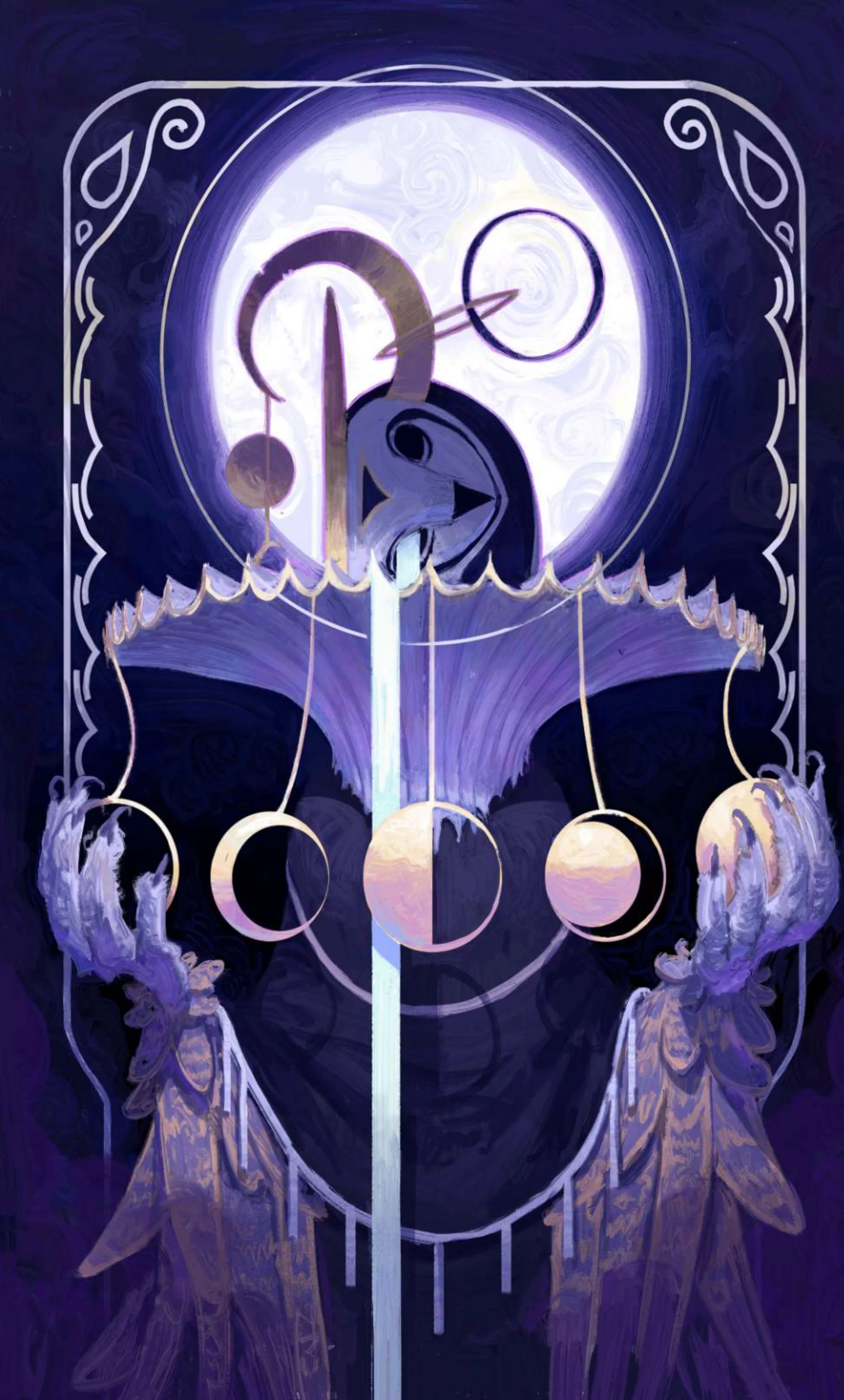
Creatures
The Moon amplifies all sounds, echoing through the city's madness. Whenever a creature deals thunder damage, it deals extra thunder damage equal to its proficiency bonus. In addition, all sounds can be heard from twice as far away.
Under the influence of the moon, the howl of beasts becomes untenable. All beasts gain the following ability:
Howling at the Moon {@recharge 3}
As a bonus action, the creature uses one of the following howls:
- Howl of Hatred
The monster unleashes a roaring howl. Each hostile creature within 10 feet of it must succeed on a Trait DC Constitution saving throw or be knocked prone and take 1d4 thunder damage.
- Howl of Healing
The monster beckons the moon for its healing properties and gains a number of temporary hit points equal to its CR (or level).
Monster CR Trait DC ≤2
10
3–4
12
6–7
14
7–8
16
9–12
17
13–16
18
17–20
19
21+
20
- Howl of Hatred
Travel
Though the moon itself may not affect travel directly, the wild beasts it unleashes upon Luyarnha certainly do. For each hour the party travels, roll a d6. On a 1 or 2, the party encounters hostile beasts. The party can attempt to skirt around the beasts and move past them with a group Stealth check against a DC equal to the highest passive Perception of the beasts they could encounter. On a failure, roll a d4 instead of a d6 for the next hour of travel. If the party fails the saving throw by 5 or more, they are immediately noticed and attacked.
Madness
When the moon first appears, all humanoids must succeed on a Madness DC Wisdom saving throw or gain a short-term madness. Any humanoid that fails the saving throw by 5 or more gains a long-term madness instead.
In addition, the Howling Moon beckons the beast within. Whenever a roll is made on any Madness table, add +10 to the result, to a maximum of 100.
Short-Term
Whenever a character gains a short-term madness under the Howling Moon, their instincts become bestial. For the duration of the madness, they have advantage on Dexterity saving throws but lose the ability to make ranged attacks or cast spells with a range further than 5 feet, wanting to shed blood with their own two hands. Further, they have advantage on any unarmed strikes or attacks that use natural weapons.
Long-Term
If a character gains a long-term madness that turns them into a scourgeborne or beast, instead of lasting for the duration of the madness, the transformation becomes permanent, and it can be reverted only by a greater restoration or wish spell. If they transform into a beast due to this moon's influence, instead of falling under the GM's control, they retain their alignment and can identify friends, follow them, and even protect them. While transformed in this way, the first time they interact with a humanoid that they aren't acquainted with, they must make a Wisdom saving throw against the Madness DC. On a failure, they see them as prey and immediately attack in order to devour them, stopping only if they are knocked unconscious.
Indefinite
If a character gains an indefinite madness under the Howling Moon, their mind becomes bestial, though their body may not follow. Their Intelligence and Charisma scores are each reduced to 1, and their Wisdom score is reduced to 14 (if it is higher). They can't cast spells, activate magic items, understand language, communicate, or plan in any intelligible way. The character can, however, identify its friends, follow them, and even protect them. In addition, if the character gains a long-term or indefinite madness, they automatically roll a 100 on the d100|percentile dice and a 10 on the d10, and the transformation becomes permanent.
Creatures
The Moon amplifies all sounds, echoing through the city's madness. Whenever a creature deals thunder damage, it deals extra thunder damage equal to its proficiency bonus. In addition, all sounds can be heard from twice as far away.
Under the influence of the moon, the howl of beasts becomes untenable. All beasts gain the following ability:
Howling at the Moon {@recharge 3}
As a bonus action, the creature uses one of the following howls:
- Howl of Hatred
The monster unleashes a roaring howl. Each hostile creature within 10 feet of it must succeed on a Trait DC Constitution saving throw or be knocked prone and take 1d4 thunder damage.
- Howl of Healing
The monster beckons the moon for its healing properties and gains a number of temporary hit points equal to its CR (or level).
Monster CR Trait DC ≤2
10
3–4
12
6–7
14
7–8
16
9–12
17
13–16
18
17–20
19
21+
20
- Howl of Hatred
Travel
Though the moon itself may not affect travel directly, the wild beasts it unleashes upon Luyarnha certainly do. For each hour the party travels, roll a d6. On a 1 or 2, the party encounters hostile beasts. The party can attempt to skirt around the beasts and move past them with a group Stealth check against a DC equal to the highest passive Perception of the beasts they could encounter. On a failure, roll a d4 instead of a d6 for the next hour of travel. If the party fails the saving throw by 5 or more, they are immediately noticed and attacked.
Madness
When the moon first appears, all humanoids must succeed on a Madness DC Wisdom saving throw or gain a short-term madness. Any humanoid that fails the saving throw by 5 or more gains a long-term madness instead.
In addition, the Howling Moon beckons the beast within. Whenever a roll is made on any Madness table, add +10 to the result, to a maximum of 100.
Short-Term
Whenever a character gains a short-term madness under the Howling Moon, their instincts become bestial. For the duration of the madness, they have advantage on Dexterity saving throws but lose the ability to make ranged attacks or cast spells with a range further than 5 feet, wanting to shed blood with their own two hands. Further, they have advantage on any unarmed strikes or attacks that use natural weapons.
Long-Term
If a character gains a long-term madness that turns them into a scourgeborne or beast, instead of lasting for the duration of the madness, the transformation becomes permanent, and it can be reverted only by a greater restoration or wish spell. If they transform into a beast due to this moon's influence, instead of falling under the GM's control, they retain their alignment and can identify friends, follow them, and even protect them. While transformed in this way, the first time they interact with a humanoid that they aren't acquainted with, they must make a Wisdom saving throw against the Madness DC. On a failure, they see them as prey and immediately attack in order to devour them, stopping only if they are knocked unconscious.
Indefinite
If a character gains an indefinite madness under the Howling Moon, their mind becomes bestial, though their body may not follow. Their Intelligence and Charisma scores are each reduced to 1, and their Wisdom score is reduced to 14 (if it is higher). They can't cast spells, activate magic items, understand language, communicate, or plan in any intelligible way. The character can, however, identify its friends, follow them, and even protect them. In addition, if the character gains a long-term or indefinite madness, they automatically roll a 100 on the d100|percentile dice and a 10 on the d10, and the transformation becomes permanent.
Creatures
The Moon amplifies all sounds, echoing through the city's madness. Whenever a creature deals thunder damage, it deals extra thunder damage equal to its proficiency bonus. In addition, all sounds can be heard from twice as far away.
Under the influence of the moon, the howl of beasts becomes untenable. All beasts gain the following ability:
Howling at the Moon {@recharge 3}
As a bonus action, the creature uses one of the following howls:
- Howl of Hatred
The monster unleashes a roaring howl. Each hostile creature within 10 feet of it must succeed on a Trait DC Constitution saving throw or be knocked prone and take 1d4 thunder damage.
- Howl of Healing
The monster beckons the moon for its healing properties and gains a number of temporary hit points equal to its CR (or level).
Monster CR Trait DC ≤2
10
3–4
12
6–7
14
7–8
16
9–12
17
13–16
18
17–20
19
21+
20
- Howl of Hatred
Travel
Though the moon itself may not affect travel directly, the wild beasts it unleashes upon Luyarnha certainly do. For each hour the party travels, roll a d6. On a 1 or 2, the party encounters hostile beasts. The party can attempt to skirt around the beasts and move past them with a group Stealth check against a DC equal to the highest passive Perception of the beasts they could encounter. On a failure, roll a d4 instead of a d6 for the next hour of travel. If the party fails the saving throw by 5 or more, they are immediately noticed and attacked.
Madness
When the moon first appears, all humanoids must succeed on a Madness DC Wisdom saving throw or gain a short-term madness. Any humanoid that fails the saving throw by 5 or more gains a long-term madness instead.
In addition, the Howling Moon beckons the beast within. Whenever a roll is made on any Madness table, add +10 to the result, to a maximum of 100.
Short-Term
Whenever a character gains a short-term madness under the Howling Moon, their instincts become bestial. For the duration of the madness, they have advantage on Dexterity saving throws but lose the ability to make ranged attacks or cast spells with a range further than 5 feet, wanting to shed blood with their own two hands. Further, they have advantage on any unarmed strikes or attacks that use natural weapons.
Long-Term
If a character gains a long-term madness that turns them into a scourgeborne or beast, instead of lasting for the duration of the madness, the transformation becomes permanent, and it can be reverted only by a greater restoration or wish spell. If they transform into a beast due to this moon's influence, instead of falling under the GM's control, they retain their alignment and can identify friends, follow them, and even protect them. While transformed in this way, the first time they interact with a humanoid that they aren't acquainted with, they must make a Wisdom saving throw against the Madness DC. On a failure, they see them as prey and immediately attack in order to devour them, stopping only if they are knocked unconscious.
Indefinite
If a character gains an indefinite madness under the Howling Moon, their mind becomes bestial, though their body may not follow. Their Intelligence and Charisma scores are each reduced to 1, and their Wisdom score is reduced to 14 (if it is higher). They can't cast spells, activate magic items, understand language, communicate, or plan in any intelligible way. The character can, however, identify its friends, follow them, and even protect them. In addition, if the character gains a long-term or indefinite madness, they automatically roll a 100 on the d100|percentile dice and a 10 on the d10, and the transformation becomes permanent.
Creatures
The Moon amplifies all sounds, echoing through the city's madness. Whenever a creature deals thunder damage, it deals extra thunder damage equal to its proficiency bonus. In addition, all sounds can be heard from twice as far away.
Under the influence of the moon, the howl of beasts becomes untenable. All beasts gain the following ability:
Howling at the Moon {@recharge 3}
As a bonus action, the creature uses one of the following howls:
- Howl of Hatred
The monster unleashes a roaring howl. Each hostile creature within 10 feet of it must succeed on a Trait DC Constitution saving throw or be knocked prone and take 1d4 thunder damage.
- Howl of Healing
The monster beckons the moon for its healing properties and gains a number of temporary hit points equal to its CR (or level).
Monster CR Trait DC ≤2
10
3–4
12
6–7
14
7–8
16
9–12
17
13–16
18
17–20
19
21+
20
- Howl of Hatred
Travel
Though the moon itself may not affect travel directly, the wild beasts it unleashes upon Luyarnha certainly do. For each hour the party travels, roll a d6. On a 1 or 2, the party encounters hostile beasts. The party can attempt to skirt around the beasts and move past them with a group Stealth check against a DC equal to the highest passive Perception of the beasts they could encounter. On a failure, roll a d4 instead of a d6 for the next hour of travel. If the party fails the saving throw by 5 or more, they are immediately noticed and attacked.
Madness
When the moon first appears, all humanoids must succeed on a Madness DC Wisdom saving throw or gain a short-term madness. Any humanoid that fails the saving throw by 5 or more gains a long-term madness instead.
In addition, the Howling Moon beckons the beast within. Whenever a roll is made on any Madness table, add +10 to the result, to a maximum of 100.
Short-Term
Whenever a character gains a short-term madness under the Howling Moon, their instincts become bestial. For the duration of the madness, they have advantage on Dexterity saving throws but lose the ability to make ranged attacks or cast spells with a range further than 5 feet, wanting to shed blood with their own two hands. Further, they have advantage on any unarmed strikes or attacks that use natural weapons.
Long-Term
If a character gains a long-term madness that turns them into a scourgeborne or beast, instead of lasting for the duration of the madness, the transformation becomes permanent, and it can be reverted only by a greater restoration or wish spell. If they transform into a beast due to this moon's influence, instead of falling under the GM's control, they retain their alignment and can identify friends, follow them, and even protect them. While transformed in this way, the first time they interact with a humanoid that they aren't acquainted with, they must make a Wisdom saving throw against the Madness DC. On a failure, they see them as prey and immediately attack in order to devour them, stopping only if they are knocked unconscious.
Indefinite
If a character gains an indefinite madness under the Howling Moon, their mind becomes bestial, though their body may not follow. Their Intelligence and Charisma scores are each reduced to 1, and their Wisdom score is reduced to 14 (if it is higher). They can't cast spells, activate magic items, understand language, communicate, or plan in any intelligible way. The character can, however, identify its friends, follow them, and even protect them. In addition, if the character gains a long-term or indefinite madness, they automatically roll a 100 on the d100|percentile dice and a 10 on the d10, and the transformation becomes permanent.
Creatures
The Moon amplifies all sounds, echoing through the city's madness. Whenever a creature deals thunder damage, it deals extra thunder damage equal to its proficiency bonus. In addition, all sounds can be heard from twice as far away.
Under the influence of the moon, the howl of beasts becomes untenable. All beasts gain the following ability:
Howling at the Moon {@recharge 3}
As a bonus action, the creature uses one of the following howls:
- Howl of Hatred
The monster unleashes a roaring howl. Each hostile creature within 10 feet of it must succeed on a Trait DC Constitution saving throw or be knocked prone and take 1d4 thunder damage.
- Howl of Healing
The monster beckons the moon for its healing properties and gains a number of temporary hit points equal to its CR (or level).
Monster CR Trait DC ≤2
10
3–4
12
6–7
14
7–8
16
9–12
17
13–16
18
17–20
19
21+
20
- Howl of Hatred
Travel
Though the moon itself may not affect travel directly, the wild beasts it unleashes upon Luyarnha certainly do. For each hour the party travels, roll a d6. On a 1 or 2, the party encounters hostile beasts. The party can attempt to skirt around the beasts and move past them with a group Stealth check against a DC equal to the highest passive Perception of the beasts they could encounter. On a failure, roll a d4 instead of a d6 for the next hour of travel. If the party fails the saving throw by 5 or more, they are immediately noticed and attacked.
Madness
When the moon first appears, all humanoids must succeed on a Madness DC Wisdom saving throw or gain a short-term madness. Any humanoid that fails the saving throw by 5 or more gains a long-term madness instead.
In addition, the Howling Moon beckons the beast within. Whenever a roll is made on any Madness table, add +10 to the result, to a maximum of 100.
Short-Term
Whenever a character gains a short-term madness under the Howling Moon, their instincts become bestial. For the duration of the madness, they have advantage on Dexterity saving throws but lose the ability to make ranged attacks or cast spells with a range further than 5 feet, wanting to shed blood with their own two hands. Further, they have advantage on any unarmed strikes or attacks that use natural weapons.
Long-Term
If a character gains a long-term madness that turns them into a scourgeborne or beast, instead of lasting for the duration of the madness, the transformation becomes permanent, and it can be reverted only by a greater restoration or wish spell. If they transform into a beast due to this moon's influence, instead of falling under the GM's control, they retain their alignment and can identify friends, follow them, and even protect them. While transformed in this way, the first time they interact with a humanoid that they aren't acquainted with, they must make a Wisdom saving throw against the Madness DC. On a failure, they see them as prey and immediately attack in order to devour them, stopping only if they are knocked unconscious.
Indefinite
If a character gains an indefinite madness under the Howling Moon, their mind becomes bestial, though their body may not follow. Their Intelligence and Charisma scores are each reduced to 1, and their Wisdom score is reduced to 14 (if it is higher). They can't cast spells, activate magic items, understand language, communicate, or plan in any intelligible way. The character can, however, identify its friends, follow them, and even protect them. In addition, if the character gains a long-term or indefinite madness, they automatically roll a 100 on the d100|percentile dice and a 10 on the d10, and the transformation becomes permanent.
Creatures
The Moon amplifies all sounds, echoing through the city's madness. Whenever a creature deals thunder damage, it deals extra thunder damage equal to its proficiency bonus. In addition, all sounds can be heard from twice as far away.
Under the influence of the moon, the howl of beasts becomes untenable. All beasts gain the following ability:
Howling at the Moon {@recharge 3}
As a bonus action, the creature uses one of the following howls:
- Howl of Hatred
The monster unleashes a roaring howl. Each hostile creature within 10 feet of it must succeed on a Trait DC Constitution saving throw or be knocked prone and take 1d4 thunder damage.
- Howl of Healing
The monster beckons the moon for its healing properties and gains a number of temporary hit points equal to its CR (or level).
Monster CR Trait DC ≤2
10
3–4
12
6–7
14
7–8
16
9–12
17
13–16
18
17–20
19
21+
20
- Howl of Hatred
Travel
Though the moon itself may not affect travel directly, the wild beasts it unleashes upon Luyarnha certainly do. For each hour the party travels, roll a d6. On a 1 or 2, the party encounters hostile beasts. The party can attempt to skirt around the beasts and move past them with a group Stealth check against a DC equal to the highest passive Perception of the beasts they could encounter. On a failure, roll a d4 instead of a d6 for the next hour of travel. If the party fails the saving throw by 5 or more, they are immediately noticed and attacked.
Madness
When the moon first appears, all humanoids must succeed on a Madness DC Wisdom saving throw or gain a short-term madness. Any humanoid that fails the saving throw by 5 or more gains a long-term madness instead.
In addition, the Howling Moon beckons the beast within. Whenever a roll is made on any Madness table, add +10 to the result, to a maximum of 100.
Short-Term
Whenever a character gains a short-term madness under the Howling Moon, their instincts become bestial. For the duration of the madness, they have advantage on Dexterity saving throws but lose the ability to make ranged attacks or cast spells with a range further than 5 feet, wanting to shed blood with their own two hands. Further, they have advantage on any unarmed strikes or attacks that use natural weapons.
Long-Term
If a character gains a long-term madness that turns them into a scourgeborne or beast, instead of lasting for the duration of the madness, the transformation becomes permanent, and it can be reverted only by a greater restoration or wish spell. If they transform into a beast due to this moon's influence, instead of falling under the GM's control, they retain their alignment and can identify friends, follow them, and even protect them. While transformed in this way, the first time they interact with a humanoid that they aren't acquainted with, they must make a Wisdom saving throw against the Madness DC. On a failure, they see them as prey and immediately attack in order to devour them, stopping only if they are knocked unconscious.
Indefinite
If a character gains an indefinite madness under the Howling Moon, their mind becomes bestial, though their body may not follow. Their Intelligence and Charisma scores are each reduced to 1, and their Wisdom score is reduced to 14 (if it is higher). They can't cast spells, activate magic items, understand language, communicate, or plan in any intelligible way. The character can, however, identify its friends, follow them, and even protect them. In addition, if the character gains a long-term or indefinite madness, they automatically roll a 100 on the d100|percentile dice and a 10 on the d10, and the transformation becomes permanent.
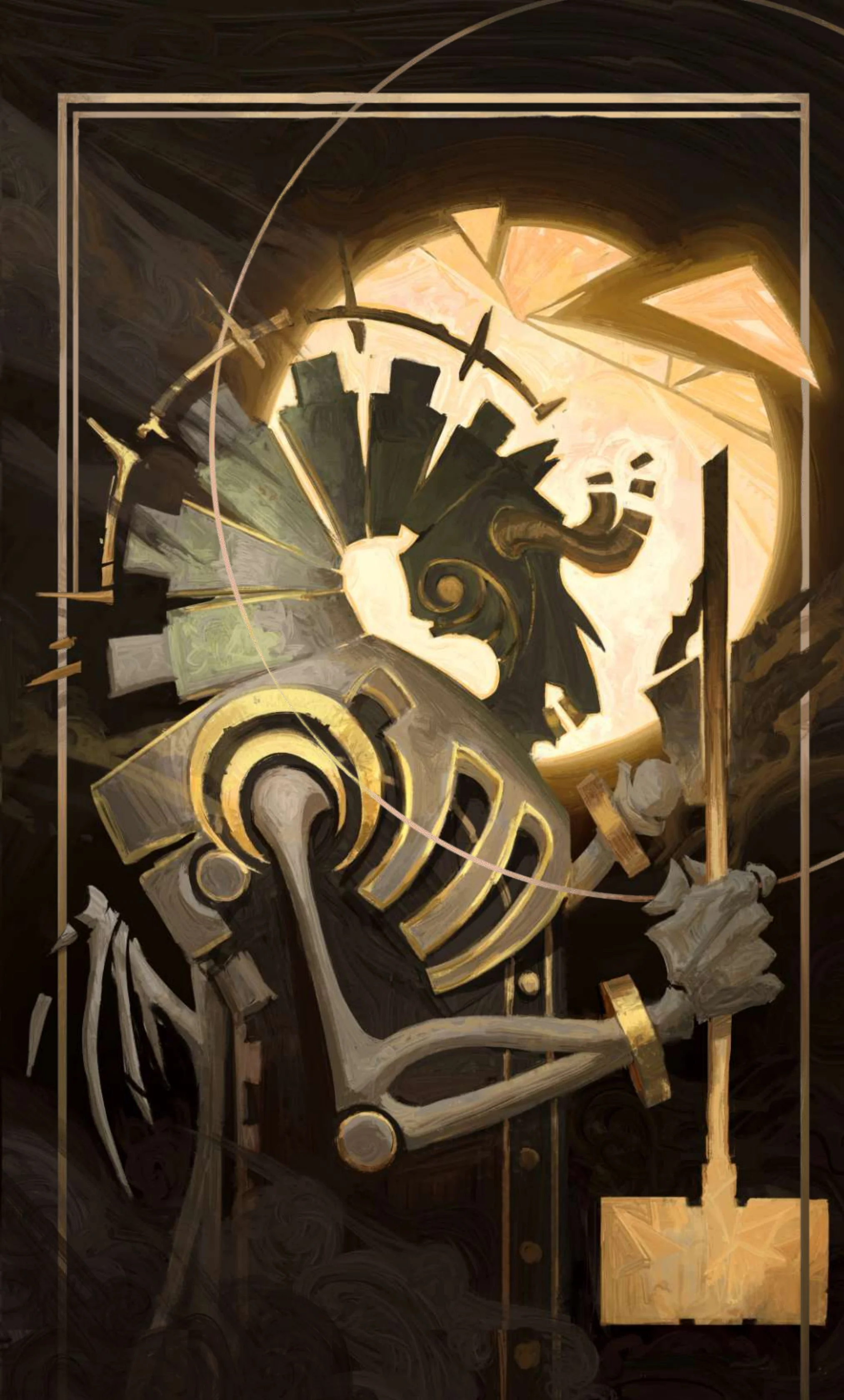
Creatures
Creatures have advantage on Stealth checks.
Creatures have disadvantage on Perception checks.
Humanoids have advantage on saving throws against madness.
Travel
Lunar Shower
Fragments of the moon frequently fall upon the world. For each hour that passes, roll a d4. On a roll of 1, a lunar shower begins, which lasts for 1d6 × 10 minutes. During the lunar shower, a rain of ephemeral light falls upon the world. This rain dispels all spells of 5th level or lower upon contact, ends concentration, and halves the range of all magics (to a minimum of 5 feet). Although it looks like solid fragments, the shards of the moon are weightless figments of light.
Creatures with a passive Perception of 15 or higher can see these fragments falling towards them 1 minute before the lunar shower begins.
Geistnacht
When the moon first appears, roll a d4. On a 1, the moon is a Geistnacht, in which case, when it shatters, it does so completely silently, unlike its usual massive shattering sound that echoes through the walls of Luyarnha.
During a Geistnacht, for each hour the party travels, roll a d6. On a 1 or 2, the party encounters hostile undeads. The party can attempt to skirt around the undeads and move past them with a group Stealth check against a DC equal to the highest passive Perception score of the undeads they could encounter. On a failure, roll a d4 instead of a d6 for the next hour of travel. If the party fails the saving throw by 5 or more, they are immediately noticed and attacked.
Madness
The Shattered Moon lost much of its maddening aura when it was destroyed; it now seeks to become whole again.
Short-Term
Whenever a character gains a short-term madness under the Shattered Moon, the moon attempts to mend its wounds by absorbing part of the character's life. For the duration of the madness, the character takes 1d6 necrotic damage at the start of each of their turns. Any magical healing chases the moon's influence away and stops the damage from recurring.
Long-Term
Whenever a character gains a long-term madness under the Shattered Moon, the astral body's influence over the character's body becomes more aggressive. One of the creature's limbs shatters and becomes completely unusable. The character takes 2d6 necrotic damage and must roll a d4 to determine which limb breaks, using the following table:
| d4 | Limb |
|---|---|
1 | Right Arm:You can no longer hold anything with two hands and you can hold only a single object at a time. |
2 | Left Arm:You can no longer hold anything with two hands and you can hold only a single object at a time. |
3 | Right Leg:Your base walking speed is reduced to 5 feet. If you still have at least one leg, you can use a crutch or cane to move at half your original base speed. |
4 | Left Leg:Your base walking speed is reduced to 5 feet. If you still have at least one leg, you can use a crutch or cane to move at half your original base speed. |
The broken limb is untreatable while the Shattered Moon is out. After the moon sets, a healing spell of 4th level or higher can restore the limb to its original state.
Indefinite
A character that gains an indefinite madness under the Shattered Moon becomes its prey, a meal to invigorate it. Roll a d100; on a result of 33 or lower, the moon's powers fail before devouring the character, only absorbing the insanity; the character is cured of all madness effects afflicting them. On a roll of 34 or higher, the character's body is consumed by the moon and they take 10d6 + 40 necrotic damage. If this damage reduces the character to 0 hit points, they are disintegrated into particles of lights that float towards the moon before vanishing.
Creatures
Creatures have advantage on Stealth checks.
Creatures have disadvantage on Perception checks.
Humanoids have advantage on saving throws against madness.
Travel
Lunar Shower
Fragments of the moon frequently fall upon the world. For each hour that passes, roll a d4. On a roll of 1, a lunar shower begins, which lasts for 1d6 × 10 minutes. During the lunar shower, a rain of ephemeral light falls upon the world. This rain dispels all spells of 5th level or lower upon contact, ends concentration, and halves the range of all magics (to a minimum of 5 feet). Although it looks like solid fragments, the shards of the moon are weightless figments of light.
Creatures with a passive Perception of 15 or higher can see these fragments falling towards them 1 minute before the lunar shower begins.
Geistnacht
When the moon first appears, roll a d4. On a 1, the moon is a Geistnacht, in which case, when it shatters, it does so completely silently, unlike its usual massive shattering sound that echoes through the walls of Luyarnha.
During a Geistnacht, for each hour the party travels, roll a d6. On a 1 or 2, the party encounters hostile undeads. The party can attempt to skirt around the undeads and move past them with a group Stealth check against a DC equal to the highest passive Perception score of the undeads they could encounter. On a failure, roll a d4 instead of a d6 for the next hour of travel. If the party fails the saving throw by 5 or more, they are immediately noticed and attacked.
Madness
The Shattered Moon lost much of its maddening aura when it was destroyed; it now seeks to become whole again.
Short-Term
Whenever a character gains a short-term madness under the Shattered Moon, the moon attempts to mend its wounds by absorbing part of the character's life. For the duration of the madness, the character takes 1d6 necrotic damage at the start of each of their turns. Any magical healing chases the moon's influence away and stops the damage from recurring.
Long-Term
Whenever a character gains a long-term madness under the Shattered Moon, the astral body's influence over the character's body becomes more aggressive. One of the creature's limbs shatters and becomes completely unusable. The character takes 2d6 necrotic damage and must roll a d4 to determine which limb breaks, using the following table:
| d4 | Limb |
|---|---|
1 | Right Arm:You can no longer hold anything with two hands and you can hold only a single object at a time. |
2 | Left Arm:You can no longer hold anything with two hands and you can hold only a single object at a time. |
3 | Right Leg:Your base walking speed is reduced to 5 feet. If you still have at least one leg, you can use a crutch or cane to move at half your original base speed. |
4 | Left Leg:Your base walking speed is reduced to 5 feet. If you still have at least one leg, you can use a crutch or cane to move at half your original base speed. |
The broken limb is untreatable while the Shattered Moon is out. After the moon sets, a healing spell of 4th level or higher can restore the limb to its original state.
Indefinite
A character that gains an indefinite madness under the Shattered Moon becomes its prey, a meal to invigorate it. Roll a d100; on a result of 33 or lower, the moon's powers fail before devouring the character, only absorbing the insanity; the character is cured of all madness effects afflicting them. On a roll of 34 or higher, the character's body is consumed by the moon and they take 10d6 + 40 necrotic damage. If this damage reduces the character to 0 hit points, they are disintegrated into particles of lights that float towards the moon before vanishing.
Creatures
Creatures have advantage on Stealth checks.
Creatures have disadvantage on Perception checks.
Humanoids have advantage on saving throws against madness.
Travel
Lunar Shower
Fragments of the moon frequently fall upon the world. For each hour that passes, roll a d4. On a roll of 1, a lunar shower begins, which lasts for 1d6 × 10 minutes. During the lunar shower, a rain of ephemeral light falls upon the world. This rain dispels all spells of 5th level or lower upon contact, ends concentration, and halves the range of all magics (to a minimum of 5 feet). Although it looks like solid fragments, the shards of the moon are weightless figments of light.
Creatures with a passive Perception of 15 or higher can see these fragments falling towards them 1 minute before the lunar shower begins.
Geistnacht
When the moon first appears, roll a d4. On a 1, the moon is a Geistnacht, in which case, when it shatters, it does so completely silently, unlike its usual massive shattering sound that echoes through the walls of Luyarnha.
During a Geistnacht, for each hour the party travels, roll a d6. On a 1 or 2, the party encounters hostile undeads. The party can attempt to skirt around the undeads and move past them with a group Stealth check against a DC equal to the highest passive Perception score of the undeads they could encounter. On a failure, roll a d4 instead of a d6 for the next hour of travel. If the party fails the saving throw by 5 or more, they are immediately noticed and attacked.
Madness
The Shattered Moon lost much of its maddening aura when it was destroyed; it now seeks to become whole again.
Short-Term
Whenever a character gains a short-term madness under the Shattered Moon, the moon attempts to mend its wounds by absorbing part of the character's life. For the duration of the madness, the character takes 1d6 necrotic damage at the start of each of their turns. Any magical healing chases the moon's influence away and stops the damage from recurring.
Long-Term
Whenever a character gains a long-term madness under the Shattered Moon, the astral body's influence over the character's body becomes more aggressive. One of the creature's limbs shatters and becomes completely unusable. The character takes 2d6 necrotic damage and must roll a d4 to determine which limb breaks, using the following table:
| d4 | Limb |
|---|---|
1 | Right Arm:You can no longer hold anything with two hands and you can hold only a single object at a time. |
2 | Left Arm:You can no longer hold anything with two hands and you can hold only a single object at a time. |
3 | Right Leg:Your base walking speed is reduced to 5 feet. If you still have at least one leg, you can use a crutch or cane to move at half your original base speed. |
4 | Left Leg:Your base walking speed is reduced to 5 feet. If you still have at least one leg, you can use a crutch or cane to move at half your original base speed. |
The broken limb is untreatable while the Shattered Moon is out. After the moon sets, a healing spell of 4th level or higher can restore the limb to its original state.
Indefinite
A character that gains an indefinite madness under the Shattered Moon becomes its prey, a meal to invigorate it. Roll a d100; on a result of 33 or lower, the moon's powers fail before devouring the character, only absorbing the insanity; the character is cured of all madness effects afflicting them. On a roll of 34 or higher, the character's body is consumed by the moon and they take 10d6 + 40 necrotic damage. If this damage reduces the character to 0 hit points, they are disintegrated into particles of lights that float towards the moon before vanishing.
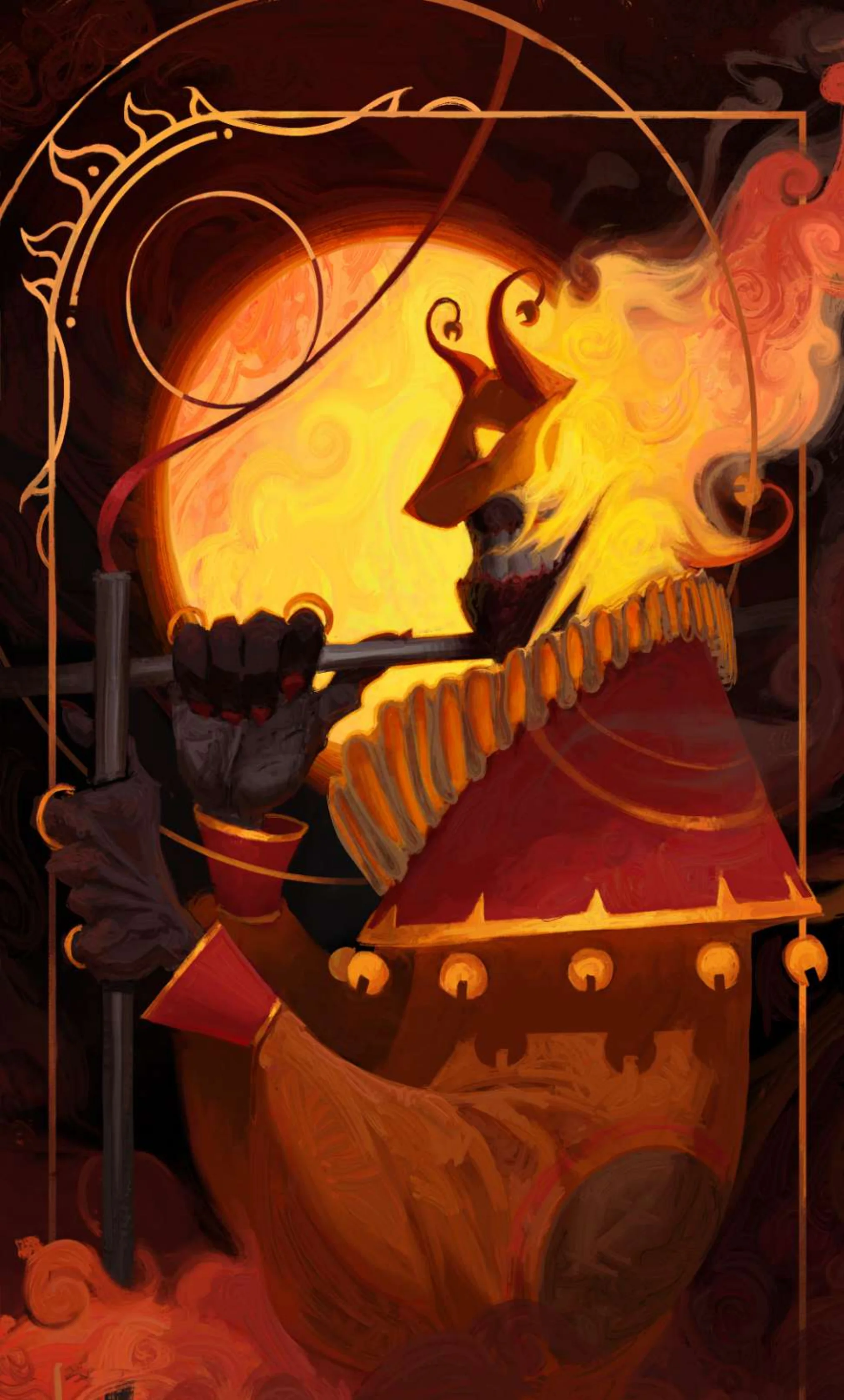
Monsters
Monsters gain resistance to fire damage; if they already have this resistance, they become immune to fire damage instead.
Their melee weapon attacks deal additional fire damage equal to their CR (minimum of 1)
Beasts gain the following trait:
Fire Charge
If the monster moves at least 20 feet straight toward a creature and then hits it with a melee attack on the same turn, that target must succeed on a Strength saving throw (DC = Trait DC + monster's Strength modifier) or be knocked prone and take fire damage equal to the Trait Damage (see table below).
| Monster CR | Trait DC | Trait Damage |
|---|---|---|
≤2 | 10 | 1d4 |
3–4 | 10 | 1d6 |
6–7 | 11 | 2d6 |
7–8 | 11 | 3d6 |
9–12 | 12 | 4d6 |
13–16 | 13 | 5d6 |
17–20 | 14 | 6d6 |
21+ | 15 | 7d6 |
Travel
Columns of fire erupt from the ground. For each hour that passes, roll a d6. On a roll of 1, a column appears under the party. Each member of the party must succeed on a DC 14 Dexterity saving throw or take fire damage equal to their level. If a creature has encountered the Scorching Moon before, it can attempt a DC 14 Survival check instead of the Dexterity saving throw, avoiding the real flames and only passing through the illusory ones. If a creature travels at a slow pace (as per the travel rules), it gains advantage on these ability checks and saving throws, and can make the Survival check even if it has never encountered the Scorching Moon before.
Madness
The flames stoke the madness within. If a character takes fire damage equal to their level or higher in a single turn, they must succeed on a Wisdom saving throw against the Madness DC or gain one short-term madness.
Short-Term
Whenever a character gains a short-term madness under the Scorching Moon, their body catches fire and they take 1d4 fire damage at the start of each of their turns. Additionally, their melee attacks deal an extra 1d4 fire damage on a hit. The fire ends if the character or a creature within 5 feet of them uses an action to douse them, or after 1 minute.
Long-Term
Whenever a character gains a long-term madness under the Scorching Moon, they feel the flames calling them for as long as the Scorching Moon is out. Whenever they see an open flame larger than 1-foot in diameter (such as a bonfire but not a torch), they must make a Wisdom saving throw against the Madness DC or become charmed by the flame. While charmed in this way, the creature is incapacitated and has a speed of 0. The effect ends on a creature if it takes any damage or if someone else uses an action to shake the creature out of its stupor. If a creature's saving throw is successful or the effect ends for it, the creature is immune to being charmed by that flame for the next 24 hours.
Indefinite
A character that gains an indefinite madness under the Scorching Moon has their soul seared. Roll a d100; on a result of 33 or lower, the character gains resistance to fire damage; on a result of 34 or higher, the character gains vulnerability to fire damage. This effect lasts until that madness is cured.
Monsters
Monsters gain resistance to fire damage; if they already have this resistance, they become immune to fire damage instead.
Their melee weapon attacks deal additional fire damage equal to their CR (minimum of 1)
Beasts gain the following trait:
Fire Charge
If the monster moves at least 20 feet straight toward a creature and then hits it with a melee attack on the same turn, that target must succeed on a Strength saving throw (DC = Trait DC + monster's Strength modifier) or be knocked prone and take fire damage equal to the Trait Damage (see table below).
| Monster CR | Trait DC | Trait Damage |
|---|---|---|
≤2 | 10 | 1d4 |
3–4 | 10 | 1d6 |
6–7 | 11 | 2d6 |
7–8 | 11 | 3d6 |
9–12 | 12 | 4d6 |
13–16 | 13 | 5d6 |
17–20 | 14 | 6d6 |
21+ | 15 | 7d6 |
Travel
Columns of fire erupt from the ground. For each hour that passes, roll a d6. On a roll of 1, a column appears under the party. Each member of the party must succeed on a DC 14 Dexterity saving throw or take fire damage equal to their level. If a creature has encountered the Scorching Moon before, it can attempt a DC 14 Survival check instead of the Dexterity saving throw, avoiding the real flames and only passing through the illusory ones. If a creature travels at a slow pace (as per the travel rules), it gains advantage on these ability checks and saving throws, and can make the Survival check even if it has never encountered the Scorching Moon before.
Madness
The flames stoke the madness within. If a character takes fire damage equal to their level or higher in a single turn, they must succeed on a Wisdom saving throw against the Madness DC or gain one short-term madness.
Short-Term
Whenever a character gains a short-term madness under the Scorching Moon, their body catches fire and they take 1d4 fire damage at the start of each of their turns. Additionally, their melee attacks deal an extra 1d4 fire damage on a hit. The fire ends if the character or a creature within 5 feet of them uses an action to douse them, or after 1 minute.
Long-Term
Whenever a character gains a long-term madness under the Scorching Moon, they feel the flames calling them for as long as the Scorching Moon is out. Whenever they see an open flame larger than 1-foot in diameter (such as a bonfire but not a torch), they must make a Wisdom saving throw against the Madness DC or become charmed by the flame. While charmed in this way, the creature is incapacitated and has a speed of 0. The effect ends on a creature if it takes any damage or if someone else uses an action to shake the creature out of its stupor. If a creature's saving throw is successful or the effect ends for it, the creature is immune to being charmed by that flame for the next 24 hours.
Indefinite
A character that gains an indefinite madness under the Scorching Moon has their soul seared. Roll a d100; on a result of 33 or lower, the character gains resistance to fire damage; on a result of 34 or higher, the character gains vulnerability to fire damage. This effect lasts until that madness is cured.
Monsters
Monsters gain resistance to fire damage; if they already have this resistance, they become immune to fire damage instead.
Their melee weapon attacks deal additional fire damage equal to their CR (minimum of 1)
Beasts gain the following trait:
Fire Charge
If the monster moves at least 20 feet straight toward a creature and then hits it with a melee attack on the same turn, that target must succeed on a Strength saving throw (DC = Trait DC + monster's Strength modifier) or be knocked prone and take fire damage equal to the Trait Damage (see table below).
| Monster CR | Trait DC | Trait Damage |
|---|---|---|
≤2 | 10 | 1d4 |
3–4 | 10 | 1d6 |
6–7 | 11 | 2d6 |
7–8 | 11 | 3d6 |
9–12 | 12 | 4d6 |
13–16 | 13 | 5d6 |
17–20 | 14 | 6d6 |
21+ | 15 | 7d6 |
Travel
Columns of fire erupt from the ground. For each hour that passes, roll a d6. On a roll of 1, a column appears under the party. Each member of the party must succeed on a DC 14 Dexterity saving throw or take fire damage equal to their level. If a creature has encountered the Scorching Moon before, it can attempt a DC 14 Survival check instead of the Dexterity saving throw, avoiding the real flames and only passing through the illusory ones. If a creature travels at a slow pace (as per the travel rules), it gains advantage on these ability checks and saving throws, and can make the Survival check even if it has never encountered the Scorching Moon before.
Madness
The flames stoke the madness within. If a character takes fire damage equal to their level or higher in a single turn, they must succeed on a Wisdom saving throw against the Madness DC or gain one short-term madness.
Short-Term
Whenever a character gains a short-term madness under the Scorching Moon, their body catches fire and they take 1d4 fire damage at the start of each of their turns. Additionally, their melee attacks deal an extra 1d4 fire damage on a hit. The fire ends if the character or a creature within 5 feet of them uses an action to douse them, or after 1 minute.
Long-Term
Whenever a character gains a long-term madness under the Scorching Moon, they feel the flames calling them for as long as the Scorching Moon is out. Whenever they see an open flame larger than 1-foot in diameter (such as a bonfire but not a torch), they must make a Wisdom saving throw against the Madness DC or become charmed by the flame. While charmed in this way, the creature is incapacitated and has a speed of 0. The effect ends on a creature if it takes any damage or if someone else uses an action to shake the creature out of its stupor. If a creature's saving throw is successful or the effect ends for it, the creature is immune to being charmed by that flame for the next 24 hours.
Indefinite
A character that gains an indefinite madness under the Scorching Moon has their soul seared. Roll a d100; on a result of 33 or lower, the character gains resistance to fire damage; on a result of 34 or higher, the character gains vulnerability to fire damage. This effect lasts until that madness is cured.
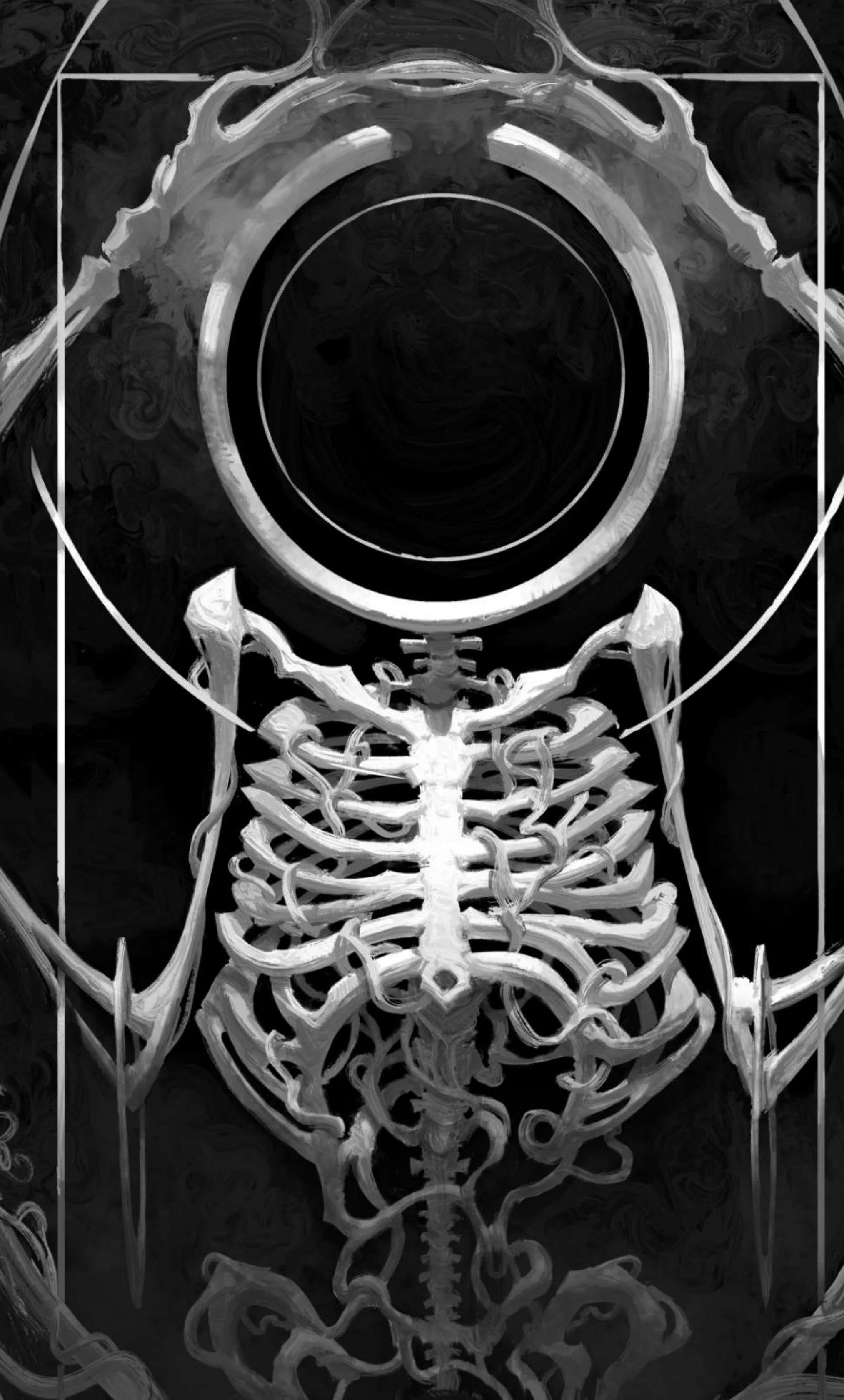
Monsters
Monsters of CR 5 or lower are blinded.
Monsters gain blindsight out to 30 feet.
Monsters have advantage on Wisdom (Perception) checks that rely on hearing or smell.
Monstrosities gain the following trait:
Void Step:
After the monster is damaged by a ranged attack, it can use its reaction to teleport to an empty space within 5 feet of the attacker and make a single melee weapon attack against it.
Travel
The light of torches barely illuminates the filth-ridden streets and screams of madness echo through the night as the void weakens the barrier between the afterlife and reality.
Staring into the abyss
If a character looks directly at the moon for more than 6 seconds, they are faced with the depths of the abyss, which gazes back at them. They must succeed on a Wisdom saving throw against the Madness DC or gain a short-term madness. The first time in a day that a character gains the ability to see invisible creatures or objects (such as the see invisibility spell or with truesight), they are compelled to stare at the moon for a round.
Vacuous Light
The void absorbs all light:
Darkvision doesn't function.
Dim light becomes darkness.
A creature that can see invisible creatures and objects doesn't suffer disadvantage on Perception checks due to darkness.
Creatures have disadvantage on saving throws against madness while not in bright light.
Madness
The void wears a heavy toll on the mind. Whenever a character fails a Wisdom saving throw, they gain one short-term madness (saving throws against madness do not trigger this effect).
Short-Term
Whenever a character gains a short-term madness under the Vacuous Moon, they see their regrets and sorrows take life. They are under the effect of the see invisibility spell for the duration of the madness. The effects of the spell cause them to see the shadowy figures of all the loved ones they lost, hanging upside down, chains wrapped around their neck, floating towards the moon. Observing that which should be reserved to the dead shatters one's psyche; they become frightened for the duration of the madness.
Long-Term
Whenever a character gains a long-term madness under the Vacuous Moon, the shadows they saw previously now become as clear as day, an image indistinguishable from reality. They are under the effect of the see invisibility spell and have disadvantage on all attack rolls, as they lose the ability to differentiate between reality and the beyond for the duration of the madness. A blinded creature doesn't suffer from this effect.
Indefinite
A character that gains an indefinite madness under the Vacuous Moon loses their grip on reality. Roll a d100; on a result of 33 or lower, the character becomes part of the void, and is able to cast the blink spell on itself at will, without providing components, shifting between planes of existence. If they use the spell 3 times in a day, when the spell ends, the character comes back into reality without their eyes and becomes permanently blinded. On a result of 34 or higher, figures of their past rip out the character's eyes before vanishing into the void with them, leaving the character permanently blinded.
Monsters
Monsters of CR 5 or lower are blinded.
Monsters gain blindsight out to 30 feet.
Monsters have advantage on Wisdom (Perception) checks that rely on hearing or smell.
Monstrosities gain the following trait:
Void Step:
After the monster is damaged by a ranged attack, it can use its reaction to teleport to an empty space within 5 feet of the attacker and make a single melee weapon attack against it.
Travel
The light of torches barely illuminates the filth-ridden streets and screams of madness echo through the night as the void weakens the barrier between the afterlife and reality.
Staring into the abyss
If a character looks directly at the moon for more than 6 seconds, they are faced with the depths of the abyss, which gazes back at them. They must succeed on a Wisdom saving throw against the Madness DC or gain a short-term madness. The first time in a day that a character gains the ability to see invisible creatures or objects (such as the see invisibility spell or with truesight), they are compelled to stare at the moon for a round.
Vacuous Light
The void absorbs all light:
Darkvision doesn't function.
Dim light becomes darkness.
A creature that can see invisible creatures and objects doesn't suffer disadvantage on Perception checks due to darkness.
Creatures have disadvantage on saving throws against madness while not in bright light.
Madness
The void wears a heavy toll on the mind. Whenever a character fails a Wisdom saving throw, they gain one short-term madness (saving throws against madness do not trigger this effect).
Short-Term
Whenever a character gains a short-term madness under the Vacuous Moon, they see their regrets and sorrows take life. They are under the effect of the see invisibility spell for the duration of the madness. The effects of the spell cause them to see the shadowy figures of all the loved ones they lost, hanging upside down, chains wrapped around their neck, floating towards the moon. Observing that which should be reserved to the dead shatters one's psyche; they become frightened for the duration of the madness.
Long-Term
Whenever a character gains a long-term madness under the Vacuous Moon, the shadows they saw previously now become as clear as day, an image indistinguishable from reality. They are under the effect of the see invisibility spell and have disadvantage on all attack rolls, as they lose the ability to differentiate between reality and the beyond for the duration of the madness. A blinded creature doesn't suffer from this effect.
Indefinite
A character that gains an indefinite madness under the Vacuous Moon loses their grip on reality. Roll a d100; on a result of 33 or lower, the character becomes part of the void, and is able to cast the blink spell on itself at will, without providing components, shifting between planes of existence. If they use the spell 3 times in a day, when the spell ends, the character comes back into reality without their eyes and becomes permanently blinded. On a result of 34 or higher, figures of their past rip out the character's eyes before vanishing into the void with them, leaving the character permanently blinded.
Monsters
Monsters of CR 5 or lower are blinded.
Monsters gain blindsight out to 30 feet.
Monsters have advantage on Wisdom (Perception) checks that rely on hearing or smell.
Monstrosities gain the following trait:
Void Step:
After the monster is damaged by a ranged attack, it can use its reaction to teleport to an empty space within 5 feet of the attacker and make a single melee weapon attack against it.
Travel
The light of torches barely illuminates the filth-ridden streets and screams of madness echo through the night as the void weakens the barrier between the afterlife and reality.
Staring into the abyss
If a character looks directly at the moon for more than 6 seconds, they are faced with the depths of the abyss, which gazes back at them. They must succeed on a Wisdom saving throw against the Madness DC or gain a short-term madness. The first time in a day that a character gains the ability to see invisible creatures or objects (such as the see invisibility spell or with truesight), they are compelled to stare at the moon for a round.
Vacuous Light
The void absorbs all light:
Darkvision doesn't function.
Dim light becomes darkness.
A creature that can see invisible creatures and objects doesn't suffer disadvantage on Perception checks due to darkness.
Creatures have disadvantage on saving throws against madness while not in bright light.
Madness
The void wears a heavy toll on the mind. Whenever a character fails a Wisdom saving throw, they gain one short-term madness (saving throws against madness do not trigger this effect).
Short-Term
Whenever a character gains a short-term madness under the Vacuous Moon, they see their regrets and sorrows take life. They are under the effect of the see invisibility spell for the duration of the madness. The effects of the spell cause them to see the shadowy figures of all the loved ones they lost, hanging upside down, chains wrapped around their neck, floating towards the moon. Observing that which should be reserved to the dead shatters one's psyche; they become frightened for the duration of the madness.
Long-Term
Whenever a character gains a long-term madness under the Vacuous Moon, the shadows they saw previously now become as clear as day, an image indistinguishable from reality. They are under the effect of the see invisibility spell and have disadvantage on all attack rolls, as they lose the ability to differentiate between reality and the beyond for the duration of the madness. A blinded creature doesn't suffer from this effect.
Indefinite
A character that gains an indefinite madness under the Vacuous Moon loses their grip on reality. Roll a d100; on a result of 33 or lower, the character becomes part of the void, and is able to cast the blink spell on itself at will, without providing components, shifting between planes of existence. If they use the spell 3 times in a day, when the spell ends, the character comes back into reality without their eyes and becomes permanently blinded. On a result of 34 or higher, figures of their past rip out the character's eyes before vanishing into the void with them, leaving the character permanently blinded.
Creatures
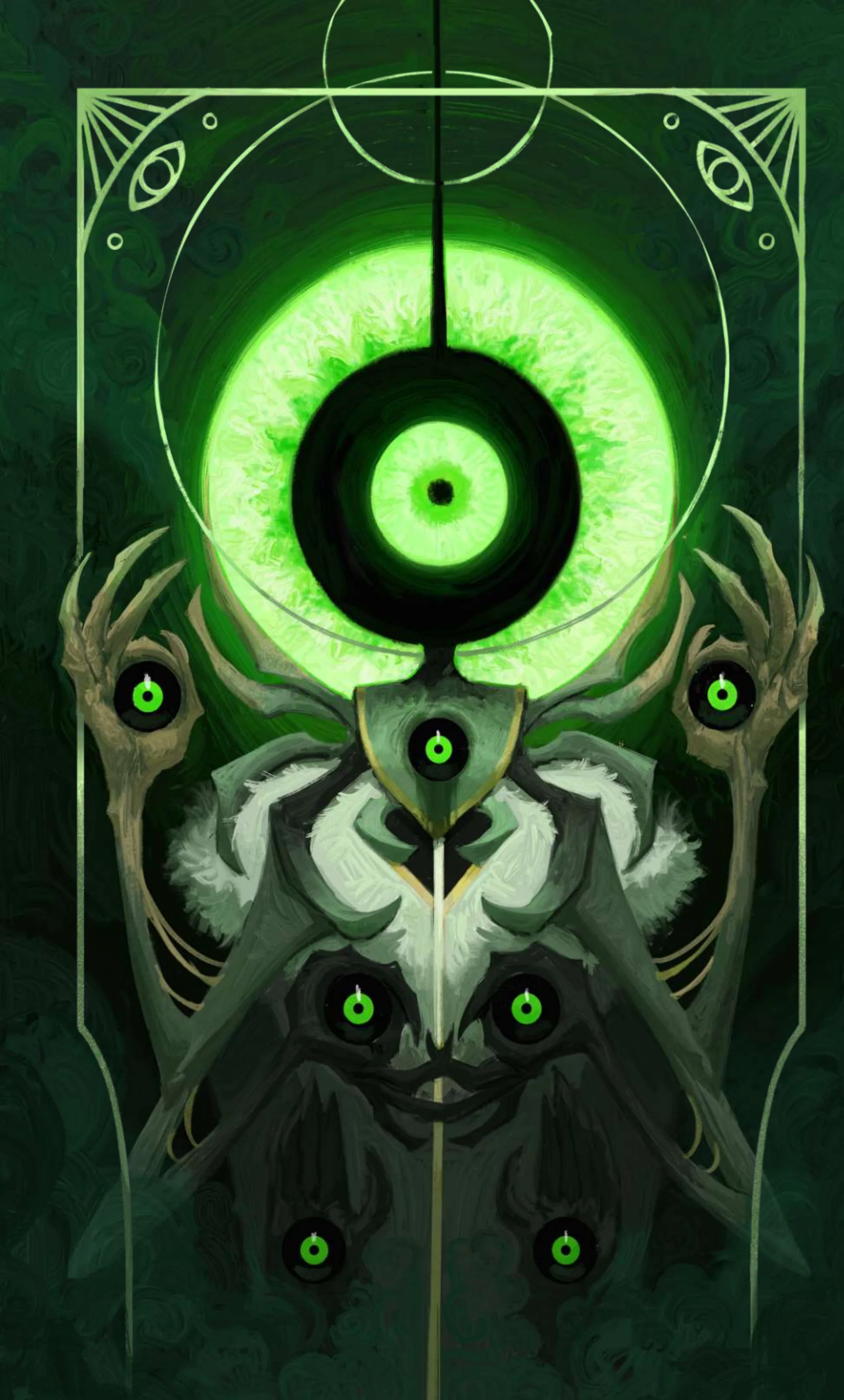
The Glowering Moon is only visible to creatures with an Intelligence score of 16 or higher, or a character level or CR higher than 4.
The moon, like the consuming mother, passes judgment on those who are not her kindred. Creatures that can see the moon, other than aberrations and monstrosities, suffer the following effects:
Creatures have disadvantage on death saving throws.
While in direct moonlight, they are under the effect of the bane spell.
Their walking speed is halved.
Travel
The world is bathed in the sickening glow of the moon, casting its judgment on those who dwell beneath it. The eldritch gaze is draining, sapping willpower and at times even the will to live. It is critical to fight on and not give up, or risk losing oneself.
All overland travel is made at half speed.
For each hour that passes, roll a d6. On a 1, the moon's influence becomes too much for the party to bear. All characters in the party must succeed on a DC 13 Wisdom saving throw or fall unconscious until the moon sets. A character within 5 feet of an unconscious character can attempt to bring them back from the brink. To do so, they must take 1 minute to shake their friend from their torpor and must make a DC 13 Persuasion check, attempting to revive the fighting spirit left within their ally.
Madness
Whenever a character fails an ability check, their searing pain of failure shuts down any rational reasoning. They must succeed on a Wisdom saving throw against the Madness DC or gain one short-term madness.
Short-Term
Whenever a character gains a short-term madness under the Glowering Moon, they give up arms as despair overtakes them. The character drops all items they are holding and curls up into a ball, falling prone and becoming incapacitated until the madness ends. A character within 5 feet of an incapacitated character can use their action to shout into their comrades' ear, shocking their system awake and ending this despair.
Long-Term
Their will to live slowly erodes. They have disadvantage on all Wisdom saving throws until the madness ends.
Indefinite
A character that gains an indefinite madness under the Glowering Moon is faced with their mortal insignificance and retreats within themselves. Roll a d100; on a result of 33 or lower, the character refuses such a fate and becomes immune to the effects of the Glowering Moon until it sets; on a result of 34 or higher, the character falls unconscious and cannot be awoken until the moon or the madness ends.
Creatures
The Glowering Moon is only visible to creatures with an Intelligence score of 16 or higher, or a character level or CR higher than 4.
The moon, like the consuming mother, passes judgment on those who are not her kindred. Creatures that can see the moon, other than aberrations and monstrosities, suffer the following effects:
Creatures have disadvantage on death saving throws.
While in direct moonlight, they are under the effect of the bane spell.
Their walking speed is halved.
Travel
The world is bathed in the sickening glow of the moon, casting its judgment on those who dwell beneath it. The eldritch gaze is draining, sapping willpower and at times even the will to live. It is critical to fight on and not give up, or risk losing oneself.
All overland travel is made at half speed.
For each hour that passes, roll a d6. On a 1, the moon's influence becomes too much for the party to bear. All characters in the party must succeed on a DC 13 Wisdom saving throw or fall unconscious until the moon sets. A character within 5 feet of an unconscious character can attempt to bring them back from the brink. To do so, they must take 1 minute to shake their friend from their torpor and must make a DC 13 Persuasion check, attempting to revive the fighting spirit left within their ally.
Madness
Whenever a character fails an ability check, their searing pain of failure shuts down any rational reasoning. They must succeed on a Wisdom saving throw against the Madness DC or gain one short-term madness.
Short-Term
Whenever a character gains a short-term madness under the Glowering Moon, they give up arms as despair overtakes them. The character drops all items they are holding and curls up into a ball, falling prone and becoming incapacitated until the madness ends. A character within 5 feet of an incapacitated character can use their action to shout into their comrades' ear, shocking their system awake and ending this despair.
Long-Term
Their will to live slowly erodes. They have disadvantage on all Wisdom saving throws until the madness ends.
Indefinite
A character that gains an indefinite madness under the Glowering Moon is faced with their mortal insignificance and retreats within themselves. Roll a d100; on a result of 33 or lower, the character refuses such a fate and becomes immune to the effects of the Glowering Moon until it sets; on a result of 34 or higher, the character falls unconscious and cannot be awoken until the moon or the madness ends.
Creatures
The Glowering Moon is only visible to creatures with an Intelligence score of 16 or higher, or a character level or CR higher than 4.
The moon, like the consuming mother, passes judgment on those who are not her kindred. Creatures that can see the moon, other than aberrations and monstrosities, suffer the following effects:
Creatures have disadvantage on death saving throws.
While in direct moonlight, they are under the effect of the bane spell.
Their walking speed is halved.
Travel
The world is bathed in the sickening glow of the moon, casting its judgment on those who dwell beneath it. The eldritch gaze is draining, sapping willpower and at times even the will to live. It is critical to fight on and not give up, or risk losing oneself.
All overland travel is made at half speed.
For each hour that passes, roll a d6. On a 1, the moon's influence becomes too much for the party to bear. All characters in the party must succeed on a DC 13 Wisdom saving throw or fall unconscious until the moon sets. A character within 5 feet of an unconscious character can attempt to bring them back from the brink. To do so, they must take 1 minute to shake their friend from their torpor and must make a DC 13 Persuasion check, attempting to revive the fighting spirit left within their ally.
Madness
Whenever a character fails an ability check, their searing pain of failure shuts down any rational reasoning. They must succeed on a Wisdom saving throw against the Madness DC or gain one short-term madness.
Short-Term
Whenever a character gains a short-term madness under the Glowering Moon, they give up arms as despair overtakes them. The character drops all items they are holding and curls up into a ball, falling prone and becoming incapacitated until the madness ends. A character within 5 feet of an incapacitated character can use their action to shout into their comrades' ear, shocking their system awake and ending this despair.
Long-Term
Their will to live slowly erodes. They have disadvantage on all Wisdom saving throws until the madness ends.
Indefinite
A character that gains an indefinite madness under the Glowering Moon is faced with their mortal insignificance and retreats within themselves. Roll a d100; on a result of 33 or lower, the character refuses such a fate and becomes immune to the effects of the Glowering Moon until it sets; on a result of 34 or higher, the character falls unconscious and cannot be awoken until the moon or the madness ends.

Monsters
Monsters gain resistance to cold damage; if they already have this resistance, they become immune to cold damage instead.
They gain temporary hit points equal to their CR when the moon first rises (minimum of 1).
If an undead creature is hit with a melee attack while they have these temporary hit points, the attacker takes cold damage equal to the initial number of temporary hit points.
Travel
The world is engulfed in a permanent blizzard that assaults the body and the mind and greatly limits visibility. Creatures other than monsters suffer a −10 penalty to Perception checks and their passive Perception. If a creature travels at a fast pace (as per the travel rules), they are considered blinded.
For each hour that passes, roll a d6. On a roll of 1, a strong blizzard wind rises. Each member of the party must succeed on a DC 14 Constitution saving throw or take cold damage equal to their level. In addition, whenever this blizzard rises, the party must succeed on a DC 16 Survival check or get lost. If they are lost, the group's travel time increases by two hours.
Madness
The cold paired with the madness slows the body. If a character gains a madness, be it short, long, or indefinite, they must make a Constitution saving throw against the Madness DC or gain one point of exhaustion. Characters with resistance or immunity to cold damage automatically succeed on this saving throw.
Short-Term
Whenever a character gains a short-term madness under the Glacial Moon, their body numbs and they suffer a -1d4 penalty to all attack rolls and saving throws until the madness ends.
Long-Term
Whenever a character gains a long-term madness under the Glacial Moon, they feel compelled to suffer the cold to cleanse their body. Whenever they are in extreme cold, to better feel the merciless bite of the cold against their skin, they remove all their clothing, save for their undergarments, and refuse to dress up. This weakens their body, giving them disadvantage on Constitution checks and Constitution saving throws while in the cold environment. Characters that are immune to cold damage do not suffer this effect.
Indefinite
A character that gains an indefinite madness under the Glacial Moon becomes numb to the world around them. Roll a d100; on a result of 33 or lower, the character's body becomes completely numb to all sensations, and they add their proficiency bonus to any Concentration checks and to any check made to endure pain. On a result of 34 or higher, the character's body suffers severe frostbite, numbing their nerves and body, crippling them. They have disadvantage on Dexterity checks and Dexterity saving throws, suffer disadvantage on all attack rolls made using Dexterity, and can't add their Dexterity modifier to their Armor Class or initiative rolls. This eldritch frostbite can only be cured if the madness is removed.
Monsters
Monsters gain resistance to cold damage; if they already have this resistance, they become immune to cold damage instead.
They gain temporary hit points equal to their CR when the moon first rises (minimum of 1).
If an undead creature is hit with a melee attack while they have these temporary hit points, the attacker takes cold damage equal to the initial number of temporary hit points.
Travel
The world is engulfed in a permanent blizzard that assaults the body and the mind and greatly limits visibility. Creatures other than monsters suffer a −10 penalty to Perception checks and their passive Perception. If a creature travels at a fast pace (as per the travel rules), they are considered blinded.
For each hour that passes, roll a d6. On a roll of 1, a strong blizzard wind rises. Each member of the party must succeed on a DC 14 Constitution saving throw or take cold damage equal to their level. In addition, whenever this blizzard rises, the party must succeed on a DC 16 Survival check or get lost. If they are lost, the group's travel time increases by two hours.
Madness
The cold paired with the madness slows the body. If a character gains a madness, be it short, long, or indefinite, they must make a Constitution saving throw against the Madness DC or gain one point of exhaustion. Characters with resistance or immunity to cold damage automatically succeed on this saving throw.
Short-Term
Whenever a character gains a short-term madness under the Glacial Moon, their body numbs and they suffer a -1d4 penalty to all attack rolls and saving throws until the madness ends.
Long-Term
Whenever a character gains a long-term madness under the Glacial Moon, they feel compelled to suffer the cold to cleanse their body. Whenever they are in extreme cold, to better feel the merciless bite of the cold against their skin, they remove all their clothing, save for their undergarments, and refuse to dress up. This weakens their body, giving them disadvantage on Constitution checks and Constitution saving throws while in the cold environment. Characters that are immune to cold damage do not suffer this effect.
Indefinite
A character that gains an indefinite madness under the Glacial Moon becomes numb to the world around them. Roll a d100; on a result of 33 or lower, the character's body becomes completely numb to all sensations, and they add their proficiency bonus to any Concentration checks and to any check made to endure pain. On a result of 34 or higher, the character's body suffers severe frostbite, numbing their nerves and body, crippling them. They have disadvantage on Dexterity checks and Dexterity saving throws, suffer disadvantage on all attack rolls made using Dexterity, and can't add their Dexterity modifier to their Armor Class or initiative rolls. This eldritch frostbite can only be cured if the madness is removed.
Creatures
Gazing at the Moon
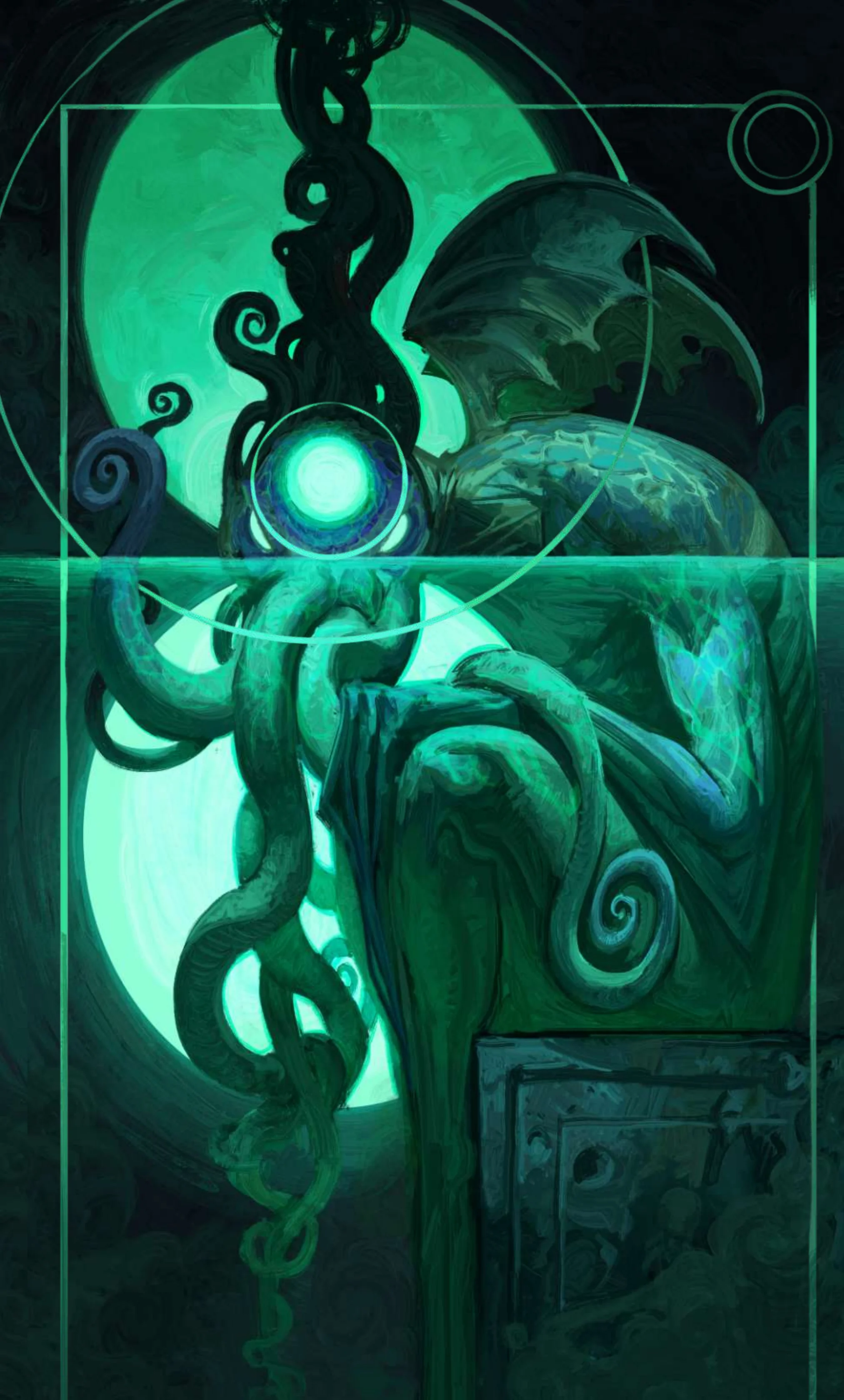
A creature that can see the moon can use its action to make a DC 19 Intelligence check as it gazes deeply into the distorted reflection of the world the moon provides. On a success, the creature channels eldritch energy and teleports as if it had cast the dimension door spell. On a failure, the creature gains a short-term madness, is randomly teleported to an empty space within 500 feet of its original location, and has resistance to falling damage until the end of its turn. Aberrations automatically succeed on this check.
Travel
Any character that has seen this moon, directly or not (even witnessing a painting of this moon is sufficient), falls under its influence. While influenced in this way, if a character leaves Luyarnha, the next time they take a long rest, they wake up in a familiar location within the city. If they are unfamiliar with Luyarnha, they wake up in a random street of the city. If a character hasn't taken a long rest within 24 hours of leaving the city, they fall unconscious, even if they are immune to the condition.
Regardless of what happens, they'll wake up with no memories of ever leaving the city, or wanting to leave the city, or making any plans to leave it. The memories of others that are aware the characters left or wanted to leave will also be altered to fill the gaps with another plausible event. For example, instead of planning to take a boat to sail away, the characters recall they wanted to use it to go fishing, but got cold feet and decided to go drinking, meet with a lover, or simply get a good night of sleep.
Anytime this curse activates after the first, a character must succeed on a Wisdom saving throw against the Madness DC or gain a long-term madness upon waking up. On a success, they instead gain a short-term madness. This lunar affliction can only be dispelled by a wish spell or if the moon is banished.
Madness
Short-Term
Whenever a character gains a short-term madness under the Slumbering Moon, they forget how to use certain skills, even ones they have trained for decades. For the duration of the madness, the character loses proficiency in a weapon or is unable to cast one spell, even if it is known or prepared (GM's choice).
Long-Term
Whenever a character gains a long-term madness under the Slumbering Moon, their memory slowly fades. They have disadvantage on any Arcana, History, or Religion checks for the duration of the madness.
Indefinite
Whenever a character gains an indefinite madness under the Slumbering Moon, their memory is permanently compromised. They lose the ability to remember anything that happens while under the effect of the madness. If the madness does end, they do not remember anything that happened while under the effect of it.
Creatures
Gazing at the Moon
A creature that can see the moon can use its action to make a DC 19 Intelligence check as it gazes deeply into the distorted reflection of the world the moon provides. On a success, the creature channels eldritch energy and teleports as if it had cast the dimension door spell. On a failure, the creature gains a short-term madness, is randomly teleported to an empty space within 500 feet of its original location, and has resistance to falling damage until the end of its turn. Aberrations automatically succeed on this check.
Travel
Any character that has seen this moon, directly or not (even witnessing a painting of this moon is sufficient), falls under its influence. While influenced in this way, if a character leaves Luyarnha, the next time they take a long rest, they wake up in a familiar location within the city. If they are unfamiliar with Luyarnha, they wake up in a random street of the city. If a character hasn't taken a long rest within 24 hours of leaving the city, they fall unconscious, even if they are immune to the condition.
Regardless of what happens, they'll wake up with no memories of ever leaving the city, or wanting to leave the city, or making any plans to leave it. The memories of others that are aware the characters left or wanted to leave will also be altered to fill the gaps with another plausible event. For example, instead of planning to take a boat to sail away, the characters recall they wanted to use it to go fishing, but got cold feet and decided to go drinking, meet with a lover, or simply get a good night of sleep.
Anytime this curse activates after the first, a character must succeed on a Wisdom saving throw against the Madness DC or gain a long-term madness upon waking up. On a success, they instead gain a short-term madness. This lunar affliction can only be dispelled by a wish spell or if the moon is banished.
Madness
Short-Term
Whenever a character gains a short-term madness under the Slumbering Moon, they forget how to use certain skills, even ones they have trained for decades. For the duration of the madness, the character loses proficiency in a weapon or is unable to cast one spell, even if it is known or prepared (GM's choice).
Long-Term
Whenever a character gains a long-term madness under the Slumbering Moon, their memory slowly fades. They have disadvantage on any Arcana, History, or Religion checks for the duration of the madness.
Indefinite
Whenever a character gains an indefinite madness under the Slumbering Moon, their memory is permanently compromised. They lose the ability to remember anything that happens while under the effect of the madness. If the madness does end, they do not remember anything that happened while under the effect of it.
Creatures
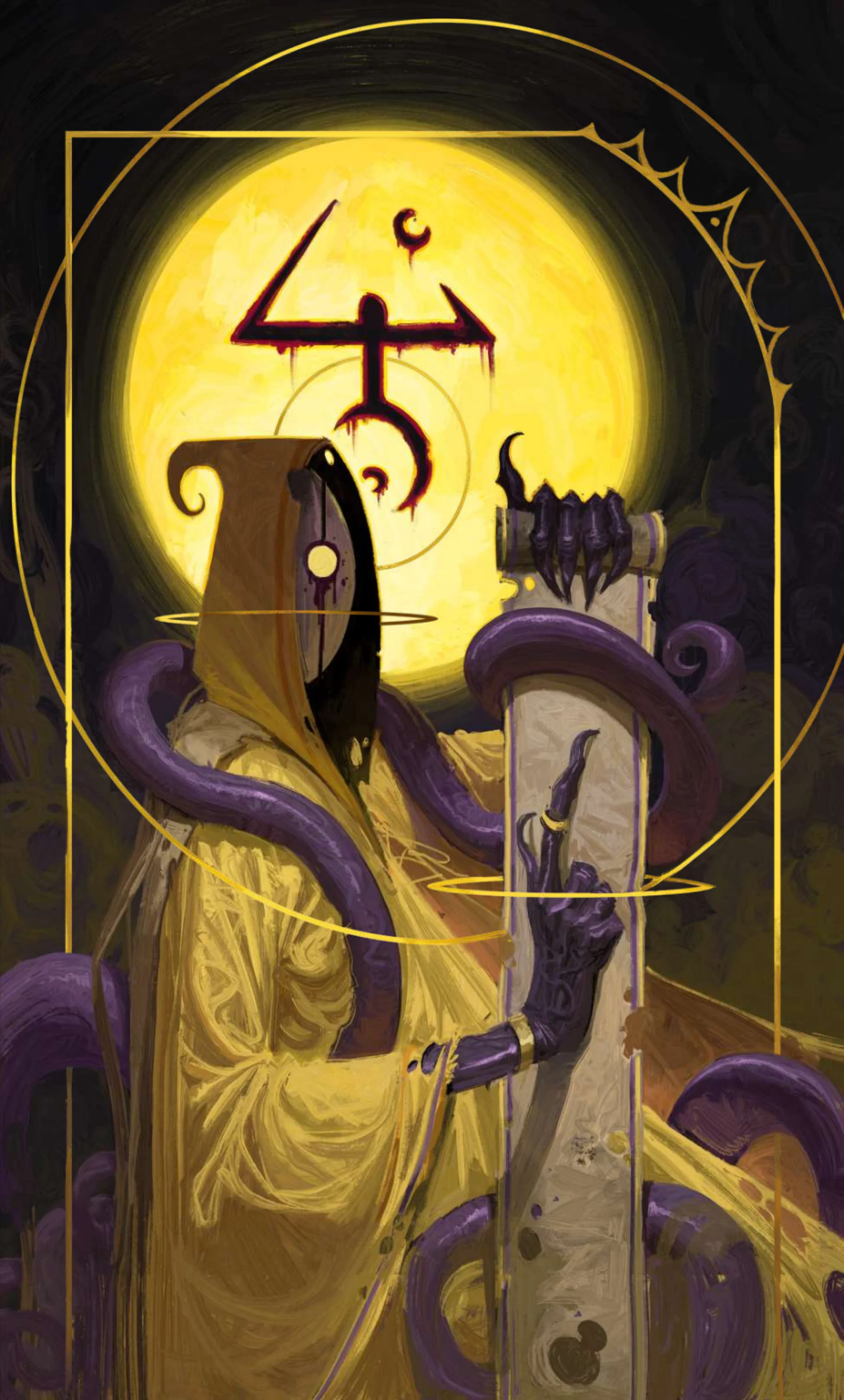
Whenever a creature deals radiant damage, their attack explodes in a burst of radiance, overcharged by the carving on the moon. If the attack, ability, or spell that deals radiant damage has a radius, the radius is increased by 5 feet. If it targets a point or a single creature, it targets a 10-foot radius instead. If an attack, ability, or spell has an effect other than the radiant damage, only the radiant damage has its radius increased. This radiant damage can also damage the creature that made the attack, used the ability, or cast the spell.
Artwork, literature, and music completed under the influence of the Yellow Crown take on an unsettling quality, with the power to corrupt or harm those who experience them, though they become that much more sumptuous. Creatures that listen to this music or look upon this art for longer than 1 minute gain disadvantage on their next saving throw against madness.
The light chases away darkness, yet beckons the embrace of death: humanoids have advantage on saving throws against the frightened condition and disadvantage on death saving throws. Only the strong shall survive.
Travel
The moon illuminates the entire city in bright light. This light is considered both daylight and moonlight. In addition, particles float through the air, seemingly emerging from the ground, only to merge with the skies above.
Darkness is reduced to dim light, and dim light is considered bright light, even if the origin of such darkness or dim light is magical.
This permanent light makes traveling hidden inconvenient at best and impossible at worst. Stealth checks made while traveling suffer a −10 penalty.
Madness
While the Yellow Crown is visible, characters that gain a madness are gripped by the visions of the original city that lies beyond the veil, where all things originate, and where all things are doomed to end. The swirling visions assault their minds, and they learn information about a random location, character, or event of the GM's choosing. The information is engulfed in madness and their mind has a hard time processing it. The GM rolls a d2. On a 1, the information they learn is true, and on a 2, the information they learn is false; the character has no way of knowing if the information they learned is true or not.
Short-Term
Whenever a character gains a short-term madness under the Yellow Crown, they develop a tremendous fear of darkness and an obsession with light. If they do not end their turn in bright light, they have disadvantage on all attack rolls, ability checks, and saving throws until the end of their next turn. If they start their turn and aren't in bright light, they must use their movement to reach the closest empty space that is in bright light. If at the end of their movement they aren't in bright light, they must use their action to Dash toward the bright light. If no such space is visible, they can use their movement and action as normal.
Long-Term
Gaining a long-term madness during the prolonged exposure to the light of the Yellow Crown has given a character photophobia, and the sheer presence of light is enough to cause them tremendous pain. If a character ends their turn in bright light, they must succeed on a Madness DC Constitution saving throw or become poisoned for 1 minute, even if they are immune to the poisoned condition. Effects that cure poison, such as the lesser restoration spell, can end the condition early, though if they expose themselves again, they'll become poisoned once more.
Indefinite
A character that gains an indefinite madness under the Yellow Crown begins to irradiate with incandescent light. Roll a d100; on a result of 33 or lower, the character can harness this light into ephemeral wings of light; if they start their turn in bright light, they can use a bonus action to gain a flying speed of 40 feet until the end of their next turn. On a result of 34 or higher, the character begins to glow uncontrollably, shedding bright light in a 10-foot radius and dim light for an additional 10 feet. While glowing in this way, the character gains no benefit from finishing a short or long rest.
Creatures
Whenever a creature deals radiant damage, their attack explodes in a burst of radiance, overcharged by the carving on the moon. If the attack, ability, or spell that deals radiant damage has a radius, the radius is increased by 5 feet. If it targets a point or a single creature, it targets a 10-foot radius instead. If an attack, ability, or spell has an effect other than the radiant damage, only the radiant damage has its radius increased. This radiant damage can also damage the creature that made the attack, used the ability, or cast the spell.
Artwork, literature, and music completed under the influence of the Yellow Crown take on an unsettling quality, with the power to corrupt or harm those who experience them, though they become that much more sumptuous. Creatures that listen to this music or look upon this art for longer than 1 minute gain disadvantage on their next saving throw against madness.
The light chases away darkness, yet beckons the embrace of death: humanoids have advantage on saving throws against the frightened condition and disadvantage on death saving throws. Only the strong shall survive.
Travel
The moon illuminates the entire city in bright light. This light is considered both daylight and moonlight. In addition, particles float through the air, seemingly emerging from the ground, only to merge with the skies above.
Darkness is reduced to dim light, and dim light is considered bright light, even if the origin of such darkness or dim light is magical.
This permanent light makes traveling hidden inconvenient at best and impossible at worst. Stealth checks made while traveling suffer a −10 penalty.
Madness
While the Yellow Crown is visible, characters that gain a madness are gripped by the visions of the original city that lies beyond the veil, where all things originate, and where all things are doomed to end. The swirling visions assault their minds, and they learn information about a random location, character, or event of the GM's choosing. The information is engulfed in madness and their mind has a hard time processing it. The GM rolls a d2. On a 1, the information they learn is true, and on a 2, the information they learn is false; the character has no way of knowing if the information they learned is true or not.
Short-Term
Whenever a character gains a short-term madness under the Yellow Crown, they develop a tremendous fear of darkness and an obsession with light. If they do not end their turn in bright light, they have disadvantage on all attack rolls, ability checks, and saving throws until the end of their next turn. If they start their turn and aren't in bright light, they must use their movement to reach the closest empty space that is in bright light. If at the end of their movement they aren't in bright light, they must use their action to Dash toward the bright light. If no such space is visible, they can use their movement and action as normal.
Long-Term
Gaining a long-term madness during the prolonged exposure to the light of the Yellow Crown has given a character photophobia, and the sheer presence of light is enough to cause them tremendous pain. If a character ends their turn in bright light, they must succeed on a Madness DC Constitution saving throw or become poisoned for 1 minute, even if they are immune to the poisoned condition. Effects that cure poison, such as the lesser restoration spell, can end the condition early, though if they expose themselves again, they'll become poisoned once more.
Indefinite
A character that gains an indefinite madness under the Yellow Crown begins to irradiate with incandescent light. Roll a d100; on a result of 33 or lower, the character can harness this light into ephemeral wings of light; if they start their turn in bright light, they can use a bonus action to gain a flying speed of 40 feet until the end of their next turn. On a result of 34 or higher, the character begins to glow uncontrollably, shedding bright light in a 10-foot radius and dim light for an additional 10 feet. While glowing in this way, the character gains no benefit from finishing a short or long rest.
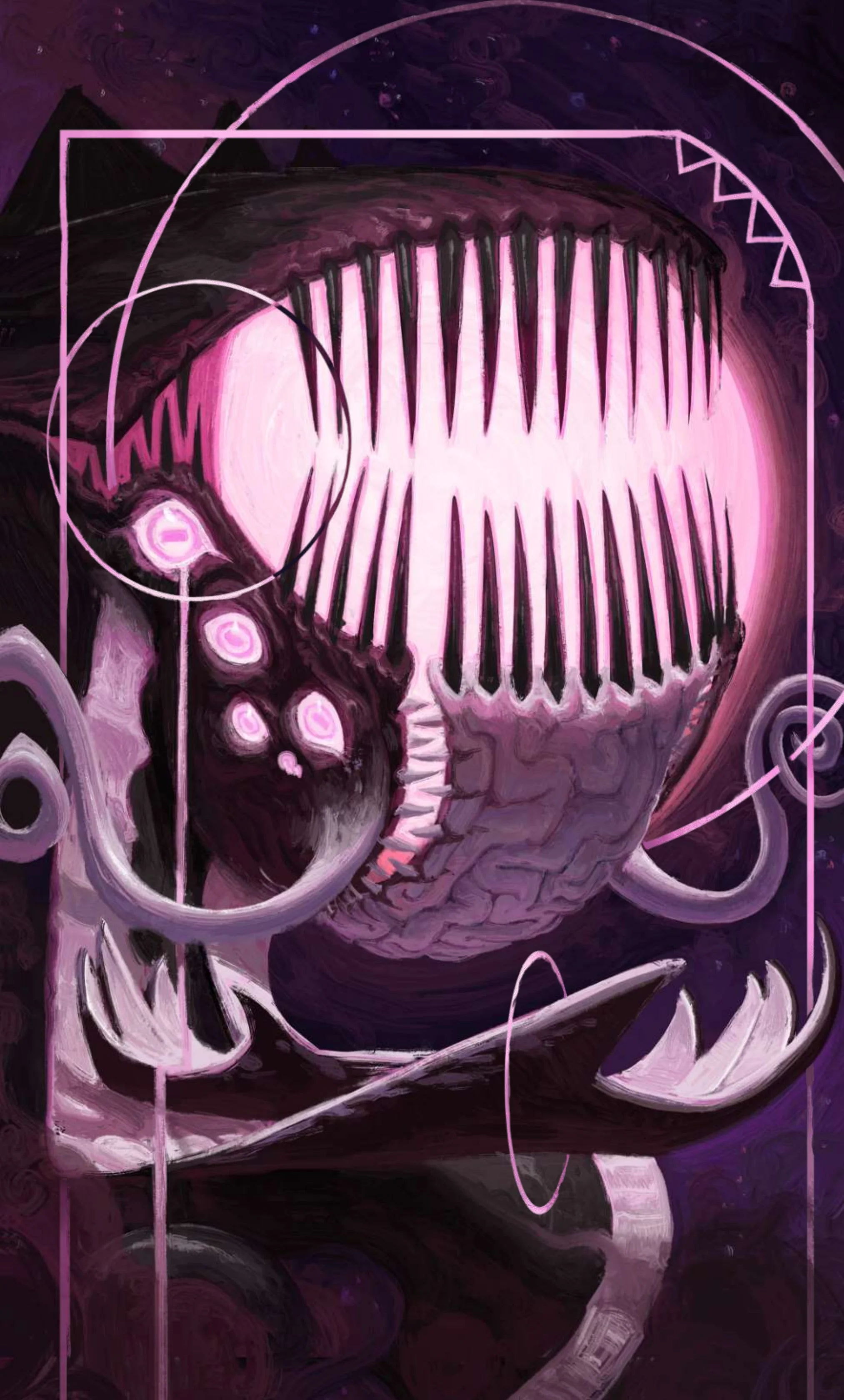
Monsters
The tar dripping from the moon causes shadows to become viscous and sticky. Creatures moving through areas of dim light or darkness have their speed halved, and they have disadvantage on initiative rolls while in dim light or darkness.
All monsters, apart from humanoids, are coated in tar. The first time a tar-coated creature takes fire or radiant damage, it explodes. Each creatures within 10 feet of an exploding creature must make a Trait DC Dexterity saving throw or take fire damage equal to the Trait Damage. The tar-coated creature has disadvantage on the saving throw.
The influence of the Creeping Tarlight causes curses and hexes to become sticky and difficult to remove. Even if dispelled, the tar-like residue of the curse may linger, causing persistent effects. All spells that cause curses have their duration doubled and cannot be removed by the remove curse spell while the moon is up.
| Monster CR | Trait DC | Trait Damage |
|---|---|---|
≤2 | 10 | 1d4 |
3–4 | 10 | 1d6 |
6–7 | 11 | 2d6 |
7–8 | 11 | 3d6 |
9–12 | 12 | 4d6 |
13–16 | 13 | 5d6 |
17–20 | 14 | 6d6 |
21+ | 15 | 7d6 |
Travel
The eerie smile on the moon occasionally emits a faint, disturbing laughter that can be heard throughout the night. This unsettling sound makes it increasingly difficult for creatures to relax their mind, as the sound emerges from everywhere at once. If characters finish a long rest during a night where the Creeping Tarlight is visible, they must succeed on a DC 14 Wisdom saving throw to gain the benefits.
In addition, the tar that drips from the moons risks engulfing the unaware in its inky depths. For each hour that passes, roll a d6. On a 1, the party becomes trapped in a heavily shadowed area, generated from the tar of the moon. Each character must succeed on a DC 14 Dexterity saving throw or fall in the darkness and be restrained. If the party traveled at a slow pace (as per the travel rules), the characters have advantage on this saving throw.
On their turn, as part of their movement, a trapped character can escape by making a DC 17 Strength check. Another creature can use an action to make a DC 17 Strength check to attempt to pull the restrained character out of the shadows, freeing them on a success. After 2 turns, the trapped character begins to suffocate in the tar, and after 3 turns, the trapped character is completely engulfed; any creature that attempts to free the character will get coated in tar. Alternatively, the shadowy tar can be lit ablaze with fire damage, which burns for 1 minute. For the duration, any creature in contact with the tar takes 2d6 fire damage at the start of each of its turns.
Madness
The tar slugs the body and the mind. If a character gains a madness while the Creeping Tarlight is out, for the duration of the madness, their speed is halved, they take a −2 penalty to AC and Dexterity saving throws, and they can't use reactions.
Short-Term
They burst into a frenzied laughter. For the duration of the madness, they automatically fail any Stealth check they make, and all creatures in a 120-foot radius are alerted to their presence.
Long-Term
The demented laughter that grips their mind becomes untenable. For the duration of the madness, they find the darkest of things profoundly amusing. If they attempt to speak or cast a spell with a verbal component, they must succeed on a Madness DC Constitution saving throw to steady themselves or be unable to talk or cast the spell, wasting their action but not the spell slot, and instead giggle and smile. If one of their allies is reduced to 0 hit points, they explode with laughter, completely losing their focus, and are stunned until the start of their next turn.
Indefinite
Roll a d100; on a result of 33 or lower, the character begins to laugh and regurgitate tar, which completely coats their body, acting like a battle armor, and their AC increases by 1; on a result of 34 or higher, the tar solidifies too much, and the character becomes petrified, their face frozen in a terrifying smile. Ending the petrification also ends the indefinite madness.
Monsters
The tar dripping from the moon causes shadows to become viscous and sticky. Creatures moving through areas of dim light or darkness have their speed halved, and they have disadvantage on initiative rolls while in dim light or darkness.
All monsters, apart from humanoids, are coated in tar. The first time a tar-coated creature takes fire or radiant damage, it explodes. Each creatures within 10 feet of an exploding creature must make a Trait DC Dexterity saving throw or take fire damage equal to the Trait Damage. The tar-coated creature has disadvantage on the saving throw.
The influence of the Creeping Tarlight causes curses and hexes to become sticky and difficult to remove. Even if dispelled, the tar-like residue of the curse may linger, causing persistent effects. All spells that cause curses have their duration doubled and cannot be removed by the remove curse spell while the moon is up.
| Monster CR | Trait DC | Trait Damage |
|---|---|---|
≤2 | 10 | 1d4 |
3–4 | 10 | 1d6 |
6–7 | 11 | 2d6 |
7–8 | 11 | 3d6 |
9–12 | 12 | 4d6 |
13–16 | 13 | 5d6 |
17–20 | 14 | 6d6 |
21+ | 15 | 7d6 |
Travel
The eerie smile on the moon occasionally emits a faint, disturbing laughter that can be heard throughout the night. This unsettling sound makes it increasingly difficult for creatures to relax their mind, as the sound emerges from everywhere at once. If characters finish a long rest during a night where the Creeping Tarlight is visible, they must succeed on a DC 14 Wisdom saving throw to gain the benefits.
In addition, the tar that drips from the moons risks engulfing the unaware in its inky depths. For each hour that passes, roll a d6. On a 1, the party becomes trapped in a heavily shadowed area, generated from the tar of the moon. Each character must succeed on a DC 14 Dexterity saving throw or fall in the darkness and be restrained. If the party traveled at a slow pace (as per the travel rules), the characters have advantage on this saving throw.
On their turn, as part of their movement, a trapped character can escape by making a DC 17 Strength check. Another creature can use an action to make a DC 17 Strength check to attempt to pull the restrained character out of the shadows, freeing them on a success. After 2 turns, the trapped character begins to suffocate in the tar, and after 3 turns, the trapped character is completely engulfed; any creature that attempts to free the character will get coated in tar. Alternatively, the shadowy tar can be lit ablaze with fire damage, which burns for 1 minute. For the duration, any creature in contact with the tar takes 2d6 fire damage at the start of each of its turns.
Madness
The tar slugs the body and the mind. If a character gains a madness while the Creeping Tarlight is out, for the duration of the madness, their speed is halved, they take a −2 penalty to AC and Dexterity saving throws, and they can't use reactions.
Short-Term
They burst into a frenzied laughter. For the duration of the madness, they automatically fail any Stealth check they make, and all creatures in a 120-foot radius are alerted to their presence.
Long-Term
The demented laughter that grips their mind becomes untenable. For the duration of the madness, they find the darkest of things profoundly amusing. If they attempt to speak or cast a spell with a verbal component, they must succeed on a Madness DC Constitution saving throw to steady themselves or be unable to talk or cast the spell, wasting their action but not the spell slot, and instead giggle and smile. If one of their allies is reduced to 0 hit points, they explode with laughter, completely losing their focus, and are stunned until the start of their next turn.
Indefinite
Roll a d100; on a result of 33 or lower, the character begins to laugh and regurgitate tar, which completely coats their body, acting like a battle armor, and their AC increases by 1; on a result of 34 or higher, the tar solidifies too much, and the character becomes petrified, their face frozen in a terrifying smile. Ending the petrification also ends the indefinite madness.
Creatures
The bodies of aberrations and humanoids become dank and slimy; spells and other magical effects cannot cause them to be restrained. These creatures can also spend 5 feet of movement to automatically escape from nonmagical restraints, such as manacles or a creature that is grappling it. Finally, being underwater imposes no penalties on their movement or attacks.
Monsters with a swimming speed of 30 feet or higher gain a flying speed equal to their swimming speed. If their speed is reduced to 0, instead of falling downwards as normal, they fall upwards, towards the water in the sky.
Aberrations gain the Bioluminescent Lure action.
Bioluminescent Lure
As an action, the monster can create a light above its head that emits a dim glow in a 10-foot radius. Creatures that see the lure must make a Wisdom saving throw against the monster's Trait DC or be charmed. While charmed, they are incapacitated and are compelled to move towards the lure with their movement each turn, only ending their movement when in the light. The charm effect lasts for 1 minute or until the creature takes damage.
Monster CR Trait DC ≤2
10
3–4
12
6–7
14
7–8
16
9–12
17
13–16
18
17–20
19
21+
20
Travel
The world is beset by heavy rains. Your travel pace is halved. If you finish a long rest without cover from the rain, you must succeed on a DC 12 Constitution saving throw or you don't gain the benefits of the long rest. The rain lightly obscures everything in the area that isn't covered, extinguishes open flames, and imposes disadvantage on Perception checks that rely on sight or hearing.
In addition, the tentacles erupting from the moon move unpredictably, sometimes sweeping down to ground level before returning to the sky. For each hour that passes, roll a d12. On a 1, a tentacle unfurls near the party. A creature can grab onto the tentacle with a successful DC 14 Athletics check. If any creatures grab and hold on to the tentacle, roll a d6. On a 1–5, the tentacle drags any creatures holding on 1000 feet in a random direction before vanishing, dropping all creatures, who each take 5d6 falling damage as they tumble to the ground. On a 6, the tentacle drags each creature into the sky ocean.
Madness
The waters agitate the madness within. Whenever a character succeeds on a saving throw against madness under the Krakenlight, they expunge it physically in the form of an inkcloud. They release a 15-foot-radius sphere of ink centered on them. The sphere spreads around corners, and its area is heavily obscured. It lasts until the end of the character's next turn.
Short-Term
Whenever a character gains a short-term madness under the Krakenlight, they become mesmerized by the roiling storm of sea and tendrils above, falling prone and having their movement speed reduced to 0 until the end of their next turn.
Long-Term
Whenever a character gains a long-term madness under the Krakenlight, they feel their body begin to mutate uncontrollably, trying to merge with the aquatic sky above, particularly when under stress. Whenever they are in combat, they must roll a d4 at the start of each of their turns. On a roll of 1, their body contorts in non-euclidean angles, causing them to writhe under the immense pain; their movement speed is halved, and they have disadvantage on all attack rolls and saving throws until the start of their next turn, where they regain temporary control of themselves.
Indefinite
A character that gains an indefinite madness under the Krakenlight begins to turn into a being of the depths. Roll a d100; on a result of 33 or lower, for the duration of the madness, the character gains the effects of the freedom of movement spell, though if they take lightning damage, they become paralyzed until the start of their next turn; on a result of 34 or higher, their body mutates, growing fins and gills, and for the duration of the madness, they must be underwater to breathe or talk, or they otherwise begin choking.
Creatures
The bodies of aberrations and humanoids become dank and slimy; spells and other magical effects cannot cause them to be restrained. These creatures can also spend 5 feet of movement to automatically escape from nonmagical restraints, such as manacles or a creature that is grappling it. Finally, being underwater imposes no penalties on their movement or attacks.
Monsters with a swimming speed of 30 feet or higher gain a flying speed equal to their swimming speed. If their speed is reduced to 0, instead of falling downwards as normal, they fall upwards, towards the water in the sky.
Aberrations gain the Bioluminescent Lure action.
Bioluminescent Lure
As an action, the monster can create a light above its head that emits a dim glow in a 10-foot radius. Creatures that see the lure must make a Wisdom saving throw against the monster's Trait DC or be charmed. While charmed, they are incapacitated and are compelled to move towards the lure with their movement each turn, only ending their movement when in the light. The charm effect lasts for 1 minute or until the creature takes damage.
Monster CR Trait DC ≤2
10
3–4
12
6–7
14
7–8
16
9–12
17
13–16
18
17–20
19
21+
20
Travel
The world is beset by heavy rains. Your travel pace is halved. If you finish a long rest without cover from the rain, you must succeed on a DC 12 Constitution saving throw or you don't gain the benefits of the long rest. The rain lightly obscures everything in the area that isn't covered, extinguishes open flames, and imposes disadvantage on Perception checks that rely on sight or hearing.
In addition, the tentacles erupting from the moon move unpredictably, sometimes sweeping down to ground level before returning to the sky. For each hour that passes, roll a d12. On a 1, a tentacle unfurls near the party. A creature can grab onto the tentacle with a successful DC 14 Athletics check. If any creatures grab and hold on to the tentacle, roll a d6. On a 1–5, the tentacle drags any creatures holding on 1000 feet in a random direction before vanishing, dropping all creatures, who each take 5d6 falling damage as they tumble to the ground. On a 6, the tentacle drags each creature into the sky ocean.
Madness
The waters agitate the madness within. Whenever a character succeeds on a saving throw against madness under the Krakenlight, they expunge it physically in the form of an inkcloud. They release a 15-foot-radius sphere of ink centered on them. The sphere spreads around corners, and its area is heavily obscured. It lasts until the end of the character's next turn.
Short-Term
Whenever a character gains a short-term madness under the Krakenlight, they become mesmerized by the roiling storm of sea and tendrils above, falling prone and having their movement speed reduced to 0 until the end of their next turn.
Long-Term
Whenever a character gains a long-term madness under the Krakenlight, they feel their body begin to mutate uncontrollably, trying to merge with the aquatic sky above, particularly when under stress. Whenever they are in combat, they must roll a d4 at the start of each of their turns. On a roll of 1, their body contorts in non-euclidean angles, causing them to writhe under the immense pain; their movement speed is halved, and they have disadvantage on all attack rolls and saving throws until the start of their next turn, where they regain temporary control of themselves.
Indefinite
A character that gains an indefinite madness under the Krakenlight begins to turn into a being of the depths. Roll a d100; on a result of 33 or lower, for the duration of the madness, the character gains the effects of the freedom of movement spell, though if they take lightning damage, they become paralyzed until the start of their next turn; on a result of 34 or higher, their body mutates, growing fins and gills, and for the duration of the madness, they must be underwater to breathe or talk, or they otherwise begin choking.
Creatures
The moon beckons. Any creature that stays under direct moonlight for more than 1 minute at a time must succeed on a Madness DC Wisdom saving throw or gain a short-term madness.
The Scent of blood and fear is thick in the air. Beasts gain advantage on attack rolls against frightened creatures.
The despair wrought by the celestial body is contagious. When a creature not currently under the influence of the Sanguine Eclipse (i.e., that isn't under the influence of a madness gained under a Sanguine Eclipse) sees one of its allies fall unconscious, it must succeed on a Madness DC Wisdom saving throw or automatically gain 2 failed death saving throws the next time they fall unconscious as a result of falling to 0 hit points. This curse of inescapable doom lasts until the moon sets or if it is removed by the remove curse spell or similar magic.
Travel
A bloody miasma dimly lights the streets of Luyarnha. The maddening influence of the moon makes traveling under a Sanguine Eclipse near impossible, unless protected from direct moonlight (see Creatures, above).
Madness
Whenever a character gains a madness under the Sanguine Eclipse, they must succeed on a Madness DC Wisdom saving throw or become frenzied for the duration of the madness or until the moon sets, whichever is shorter. While frenzied, they view their allies as enemies and must use their turns attempting to kill them. They prioritize killing in order of affection, meaning the closer they are to a person, the stronger the urge to kill them, with the strongest being that between mother and child. Characters that are immune to the charmed condition or have advantage on saving throws against charm effects have advantage on this saving throw.
Short-Term
Whenever a character gains a short-term madness under the Sanguine Eclipse, they grow claws to rip through the body of their new-found prey. They can use these claws as unarmed strikes, using their Strength or Dexterity modifier for attack and damage rolls (whichever is higher), and dealing 1d8 magical slashing damage on a hit.
Long-Term
Whenever a character gains a long-term madness under the Sanguine Eclipse, they grow fangs capable of feeding them the blood of their loved ones. Once per turn, they can replace one melee attack with a fang attack, using their Strength or Dexterity modifier for attack and damage rolls (whichever is higher). On a hit, the fangs deal 1d6 magical piercing damage and the character gains half the damage dealt in temporary hit points. In addition, the character develops sunlight sensitivity for the duration. While in sunlight, they have disadvantage on attack rolls, as well as Wisdom (Perception) checks that rely on sight.
Indefinite
A character that gains an indefinite madness under the Sanguine Eclipse begins to succumb to their newfound bloodlust. Roll a d100; on a result of 33 or lower, the character can ignore the effects of gaining a madness under the Sanguine Eclipse until the current eclipse sets; on a result of 34 or higher, their creature type becomes undead, and when they hit with their fang attack (if they have one), they can choose to regain hit points instead of gaining temporary hit points. Additionally, they gain the urge to feed on blood. Each day that they don't feed on the blood of a humanoid, they gain 1 level of exhaustion. They also gain a flying speed equal to their walking speed as long as they remain in darkness.

The Blood Moon takes three days to fully rise, and during this time, no other Eldritch Moon can occupy the sky. As the time passes, the moon gradually transitions to a deeper shade of crimson until it reaches its apogee. At this peak, the rebirth process commences.
Over a 1 hour period, all creatures that have died in the last 30 days have a 50|50% chance|Blood Moon|The creature is resurrected.|The creature remains dead. of being resurrected, as per the true resurrection spell, by the Blood Moon of Rebirth, unless their soul was destroyed or imprisoned, in which case they aren't brought back to life. If they are resurrected in this way, roll a d6. On a 3 or higher, they retain their alignment and personality upon revival. The number required to maintain their sanity increases by 1 for each time they have previously died (so they need to roll a 5 or higher if they already died twice). If they do not retain their sanity, they either become husks obeying the whim of a Great One or mindless beasts.
Creatures that retain their alignment and personality bear a special Eldritch Carving on their body upon resurrection: the Sacrificial Brand [...].